Life Planning Goals & Action Plans

Having established the direction of your Life Plan by examining and determining your Core Values, defining your Life Purpose, examining the current realities of your life with the Wheel of Life, and envisioning what impact you desire from your life in your Life Vision Statement, you are now ready to begin moving forward with defining how your plan turns into action, the most important step.

Too often in both business and in our personal lives, we are guilty of crafting a plan but then putting it on the shelf to think about some other day. A plan only has value when it prompts movement or change. Good intentions in the plan will have little effect on the course of your life without establishing Goals and Action Plans to move your life toward where you want it to be.

We can develop and gather these goals into two major categories, both of which are driven by the prior steps in your Life Plan. There will be some goals and action plans specifically defined to align your life with where you want it to go, in other words, plans to extract yourself from things that do not fit with your Life Plan and distract your attention and energy from the important things. The other category will be those goals and action plans that are defined to move you further along or accelerate your development in the vision that you have defined for your life.

Elsewhere much is available on developing goals and action plans, so here we will give a very brief overview. Individuals are sometimes capable of developing these goals and actions on their own, but it is often more effective to find a partner or a coach who is able to help you think more deeply about developing the best goals and actions and to help you achieve them through an accountability relationship.

One of the effective tools for defining Goals is the use of the SMART acronym. Goals should be specific, measurable, attainable, relevant, and time-specific. In other words, in setting goals we must be able to judge our achievement of them. Of course, one of the challenges in setting goals in the Life Plan process is defining and prioritizing the many goals that might be possible. Often, the Wheel of Life exercise is a big help in this defining and prioritizing process.

Similarly, Action Plans must be specific and sell-defined. We can’t fall into the trap of thinking about doing “something sometime.” Action Plans must be carefully crafted to identified who, what, where, and when. And accountability is often helpful in seeing these actions through, so a partner or coach can be very helpful.


This article is the last in a series of articles describing the Life Planning process. To see the other articles in the series, click here. While individuals are welcome to complete this process on their own, partnering with a Life Coach is often more effective. Please contact us for more information.

Life Vision Statement

“So teach us to number our days that we may get a heart of wisdom.” – Psalm 90:12 (ESV)

Our lives can be described as a trip. We are somewhere now, and our trip will end at some point. The question that we face is, when we reach the end of this trip where do we hope to be and what will we have experienced along the way? Are we drifting casually toward that destination or purposefully? A Life Purpose Statement and our Core Values are signposts along the way that keep us on course. But a Life Vision Statement is another part of guiding our life priorities and choices.

When you reach the end of your time on earth, what impact will you have made and on whom? How will you be remembered? What will be your legacy? (Thinking here in much broader terms than the financial industry’s definition.) A life plan allows you to be more intentional in defining and determining the impact that you will have.

At my father-in-law’s funeral and the visitation, I got a first-hand view of the legacy of a man who I greatly admired. His family, his church family, many of his work colleagues, and others who had seen and benefited from his life bore witness to the way that he had lived and the legacy that he left behind. I heard stories of changed lives, successful careers, and so much more that were largely or at least in part attributed to the influence and guidance that he had provided.

In thinking about your life vision or life goals, you might answer the following questions:

  • How do I hope to be remembered?
  • What is the ultimate vision for my life?
  • What do I want my life to be about?
  • What impact do I hope to have on the world and on people, thinking about some specific people?
  • If there were no limits, what would be possible for my life?
  • What do I want for each area of my life?
  • What will I accomplish?

There are different ways to describe your Life Vision. One very effective way is to write the eulogy that you would hope to be spoken by those important people in your life at your funeral. Who are the people on whom you hope to have an impact? For those closest to you, specifically name them. For groups such as work colleagues, you might classify them together. For the various people or groups, what impact do you hope that you will have had on their lives, describing this legacy in specific terms. In other words, not “he/she was a good person” or “he/she influenced my life” but rather “____ helped me in these three specific ways: ____, ____, and ______”


This article is part of a series of articles describing the Life Planning process. To see the other articles in the series, click here. While individuals are welcome to complete this process on their own, partnering with a Life Coach is often more effective. Please contact us for more information.

Wheel of Life

Wheel of Life Instructions

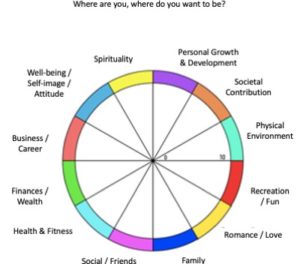
The Wheel of Life is a tool to guide some thinking about the quality or direction of a person’s life. The wheel looks at various areas of your life and then provides a scale from 0 (at the center) to 10 (at the outer ring) to measure satisfaction (or potentially other measures) in each area of life.

  1. Review the twelve areas of life represented on the attached wheel.
  2. Add, subtract, split, or rename any of the areas as you feel appropriate to represent your life.
  3. Rank your current level of satisfaction with each area of life by drawing a line across each segment. Satisfaction might be a cross-product of progress, passion, production, and purpose. Scoring is between 1 (very dissatisfied) and 10 (fully satisfied). Draw a line across that area and shade in the enclosed area.
  4. On an additional wheel, rank your level of desired satisfaction. (While we might all dream of achieving 10, or fully satisfied, in every area, reality tells us that is unlikely, and we might need to make some tradeoffs or prioritize those areas where we want higher levels of satisfaction.)

Some other benefits or uses of the Wheel of Life:

  • Describe briefly what each area of your wheel encompasses.
  • Prioritize the areas on your wheel as to which are most important to you. Rank order is one possibility, but it is sometimes more effective to allocate points (perhaps dividing 1,000 points) to each area to differentiate the importance of each.
  • Describe the basis for your current satisfaction or lack thereof for each area of life.
  • Prioritize which areas of your life you want to work on. This could be based on the greatest importance, the widest gap in satisfaction, the ease or difficulty, the biggest bang for the buck, etc.

The Wheel of Life will be an important tool later in the Life Planning process as you begin to set goals and define action plans. Understanding the priority, current situation, and desired situation will help you set priorities and define actions.

This article is part of a series of articles describing the Life Planning process. To see the other articles in the series, click here. While individuals are welcome to complete this process on their own, partnering with a Life Coach is often more effective. Please contact us for more information.

Life Purpose Statement

A Life Purpose Statement is a succinct and specific description of your “why”, your purpose for being on this earth. It describes your reason for getting out of bed in the morning. It translates who you are into what you do. It converts your values into your actions.

Your Life Purpose Statement serves as a year-by-year, day-by-day, minute-by-minute signpost to help you prioritize opportunities and responsibilities in your life. In 7 Habits, Covey writes about distinguishing between the urgent and the important. Your Life Purpose Statement helps you identify your “important.” It sets direction, helps determine goals, and defines action.

For a person of faith, we believe that God has designed and developed us each uniquely with gifts and talents that best enable us to serve Him and the world in certain ways. The process of developing our Life Purpose Statement involves examining who we are and finding the purpose for which we have been prepared. Most often, when we understand our purpose, it is the path that energizes us and brings us satisfaction and contentment. It aligns what we do with who we are.

A Life Purpose Statement differs slightly from a Life Vision Statement. You might choose to think of them as one, but in our process the Life Purpose Statement is designed to guide the day-to-day while the Life Vision Statement defines our lifetime goals or objectives.

Developing a life purpose statement is seldom a one and done process. It requires a great deal of thought and introspection. And it can evolve over time.

Here are the major steps in writing your purpose statement:

  1. Identify your values and passion. The Core Values process is a precursor as it forces us to identify the most important values that drive us. Other parts of this step might be thinking about such things as your history and examining where you have found joy and fulfillment.
  2. Identify your strengths and skills. Think about how you have been gifted and where you are energized and most in your element. Some people choose to do a personal SWOT analysis. Gathering input from people who know you well can be helpful in this entire process, but especially in this step.
  3. Begin to think about desired results. This might be lifetime results (as in the Life Vision Statement) but more appropriate here are the results that you have seen and hope to see as you live out your Life Plan.
  4. Begin an iterative process of drafting and refining a Life Purpose Statement that is probably one sentence but contains your what, how, and why. In other words, what is your purpose, how are you equipped or being developed for this, and how will you impact the world, a certain field or area, or certain people or types of people, etc.

As with all of the Life Plan, your Life Purpose Statement (or Mission Statement) will require much thought to develop. Then it must become ingrained into your mind and life. And it must be periodically examined as both a reminder and an opportunity to refine and evolve it.


This article is part of a series of articles describing the Life Planning process. To see the other articles in the series, click here. While individuals are welcome to complete this process on their own, partnering with a Life Coach is often more effective. Please contact us for more information.

The Life Planning Process

“So teach us to number our days that we may get a heart of wisdom.” – Psalm 90:12 (ESV)

Some people drift through life, simply going with the flow and reacting to or accepting the various twists and turns along the way. Other people live in a very purposeful way, thinking through who they are and who they want to be. These people picture the life they want to live. They then set goals and take action steps to actually live the life to which they believe that they have been called. This process of defining the life that one desires to live and becoming the person for which you have been created, is called Life Planning. While we are not in charge of all that happens in our life, we are able, perhaps even responsible, for trying to find and live out the purpose for which we have been placed on this earth in this time and space.

The elements of Life Planning:

  • Life Vision Statement – how do you want to be remembered?
  • Life Purpose Statement – what is the purpose for which you live?
  • Core Values – what values are most important to you?
  • Wheel of Life – in the various areas of life, where are you and where do you want to be?
  • Goals – what are some of the goals that move you to where you want to be and to how you want to be remembered? These will include long-term goals, mid-term goals, as well as short-term goals, such as annual, quarterly, and monthly goals. Which three to five goals are you going to work on right now?
  • Action Plans – what are the actions that you will take to achieve these goals?

The above list is in a hierarchy of the way these elements might fit together and the order that we might review them periodically. It is most likely that you will develop your life plan in a different order. Often the development of a life plan turns out to be an iterative process in which we re-visit a previous step to revise or clarify. Life plans are also living documents, requiring periodic review, rethinking, and revising as life changes and we progress in our growth and development. The most effective way to develop your first life plan is to focus on these elements in this order:

  1. Core Values
  2. Life Purpose Statement
  3. Wheel of Life
  4. Life Vision Statement
  5. Goals
  6. Action Plans

This article is the first in a series of articles describing the Life Planning process. Click on any of the linked elements to learn more about the process. While individuals are welcome to complete this process on their own, partnering with a Life Coach is often more effective. Please contact us for more information.
The Power of Peer Groups

It’s lonely at the top is not just a cute saying, leaders often do feel isolated. It is difficult to find a safe and helpful place for deep conversations about the challenges that we face in leadership. One of the best tools for personal growth as a leader is a peer group. A good peer group can provide accountability, encouragement, advice, and a perspective that helps a leader recognize strengths, weaknesses, and areas for growth. See the article for nine ways that peer groups help leaders overcome the challenges that they often face.

The Coach Approach – Intro

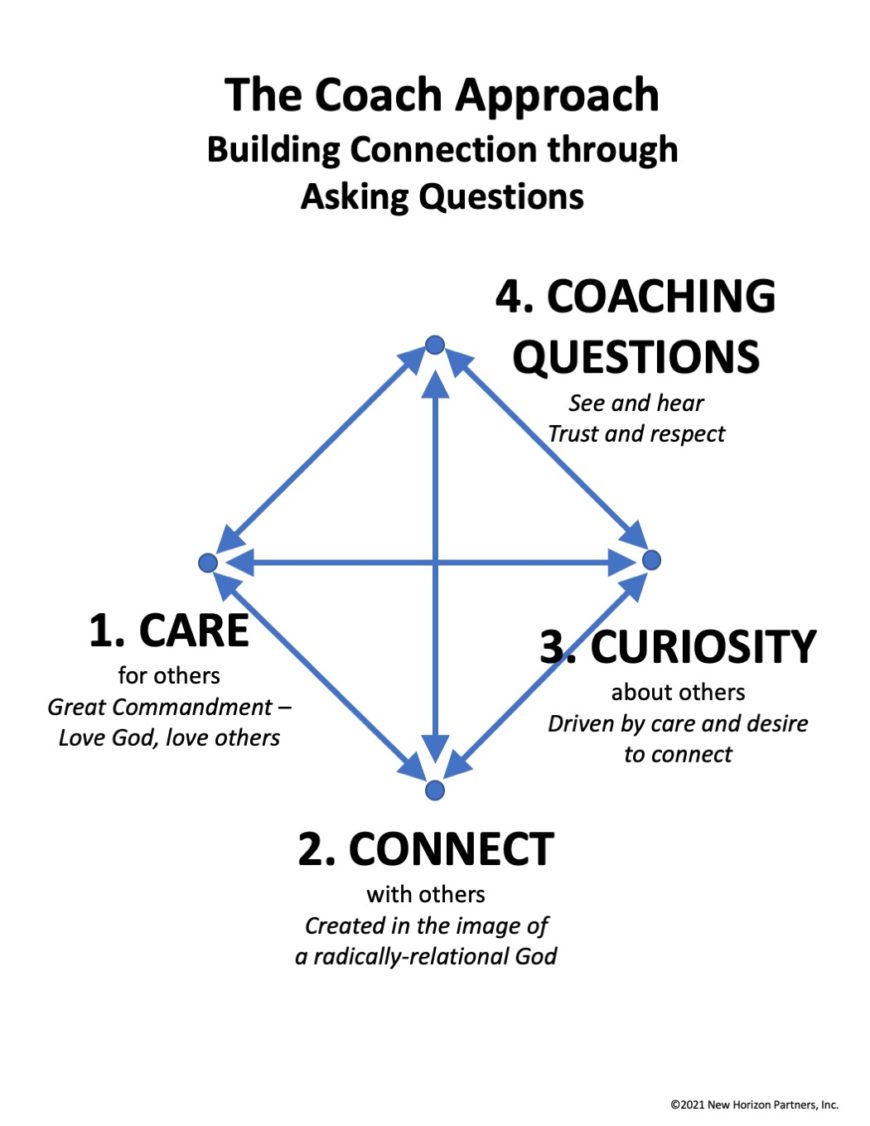
The Coach Approach© is a lifestyle or mindset of utilizing questions in conversations to build relationship and/or to help others to grow. It is an other-focused or “one another” approach to relating to the people around us. The Coach Approach could also be defined as “Making a practice of building conversations around powerful questions that are based on curiosity with the goal of building connection and demonstrating care for the people around us.”

This article is an introduction to the concept of the Coach Approach, which is then explained in a series of following articles on specific elements of the concept. The complete list of articles explaining what the Coach Approach is, why it is the best way to build relationship, and examples of the Coach Approach in action is shown later in this article. But first, here is the model of the Coach Approach in action:

Read the full series:

The Coach Approach, Part 1 – The Roadblocks

The Coach Approach, Part 2 – The Motivation

The Coach Approach, Part 3 – The Route

The Coach Approach, Part 4 – The Destination

The Coach Approach, Part 5 – The Coach Approach in Action

The Coach Approach, Part 6 – More of the Coach Approach in Action

The Coach Approach, Part 7 – Lessons from Mr. Rogers

500 Powerful Questions – Sample Questions

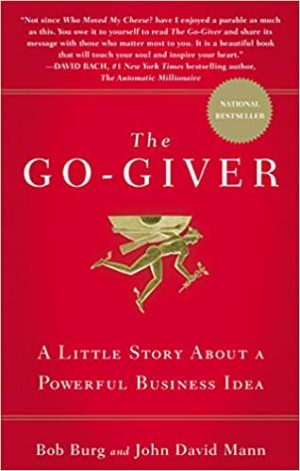
“The Go-Giver” by Bob Burg and John David Mann

This book, The Go-Giver: A Little Story About a Powerful Business Idea, is a short, quick read. Written by Bob Burg and John David Mann in a fable style, it tells the story of person who was struggling to reach his sales quota until he finds a new way to do business. This new way is to first build personal relationships that open up possibilities for business opportunities.

You might surmise correctly from the title that the idea of a Go-Giver is in direct contrast to a Go-Getter. What we consider a go-getter is quite often a person focused on him- or herself, looking out for “Number 1.” The go-getter is often out to win at any cost. While they may speak of win-win situations, the important thing in their mind is what they are going to get out of the transaction. And life is very much based on just that – transactions, without much consideration of relationships. The Go-Giver, on the other hand, is focused first on the other person. The important thing to the go-giver is providing value to the other and developing a relationship. Transactions are the reward that might result from serving the other.

And this is the big idea of the book, that what the authors term as the “Five Laws of Stratospheric Success” can lead to business growth and success. The five laws as listed in the book are as follows:

  • The First Law – The Law of Value – Your true worth is determined by how much more you give in value than you take in payment.
  • The Second Law – The Law of Compensation – Your income is determined by how many people you serve and how well you serve them.
  • The Third Law – The Law of Influence – Your influence is determined by how abundantly you place other people’s interests first.
  • The Fourth Law – The Law of Authenticity – The most valuable gift you have to offer is yourself.
  • The Fifth Law – The Law of Receptivity – The key to effective giving is to stay open to receiving.

These laws are, for the most part, in line with the Biblical commands to “one another”, that is to serve, love, help, etc. one another. And the “one another” is anyone that comes across our path, not just the ones that are deemed strategic opportunities. These laws and the “one another” commands should be guideposts for the way that we live and do business. The part of the book that is misleading is that everyone in the fable who lives out these five laws becomes a multi-millionaire. This is not realistic, and the book implies that this goal of generating great wealth is the one and only motivation for following such laws. I would submit that the true motivation should be “one anothering,” or caring for each other and providing value to all with whom we interact. Even with this major flaw, this book is an interesting and thought-provoking read.

Buffett’s “What Separates Successful People from the Rest”

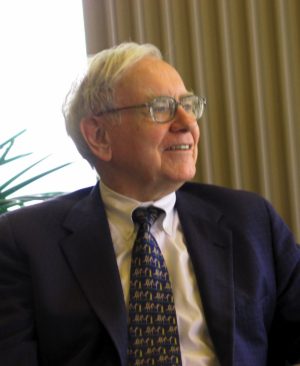
In a recent article from Inc. magazine, the author shares advice from Warren Buffett on self-improvement. One of Buffett’s mantras is “Go to bed a little smarter each day.” Comparing it to compound interest, Buffett says that is how knowledge builds up.

In the article, the author says, “Buffett knows that the mind is the most powerful weapon to succeed in business. To continuously grow yours as Buffett does his, choose to live your life exercising your mind first!” The article goes on to describe four ways of growing your mind:

  1. Read like crazy. Buffett is a voracious reader and typically spends 80 percent of his day reading.
  2. Create margin to “just sit and think.” Rather than working harder or trying to accomplish a long to-do list, taking time to think allows us to prioritize and make the important decisions well.
  3. Invest in your development. Buffett is quoted as saying, “The most important investment you can make is in yourself.”
  4. Surround yourself with the right people. From personal experience, Buffet learned that “it pays to hang around with people better that you are because you will float upward.”

The article is a short read with a little more detail on each of these four points.