Leadership with the Aroma of Christ

One can find many definitions of leadership. At its most basic, leadership is the ability to influence others. Peter Drucker said, “The only definition of a leader is someone who has followers.” John Maxwell, in a similar way, says, “Leadership is influence – nothing more, nothing less.” In an article in Forbes some years ago, Kevin Kruse provided this definition, “Leadership is a process of social influence, which maximizes the efforts of others, towards the achievement of a goal.”

Peter Drucker described five major roles of leadership as the following:

  • setting objectives
  • organizing the group
  • motivating and communicating
  • measuring performance
  • developing people

Again, we see here the importance of influence.

Our Faith Guides Our Leadership

As a Christ-follower who is also a leader, our influence should bear the aroma of Christ in all that we do.

But thanks be to God, who in Christ always leads us in triumphal procession, and through us spreads the fragrance of the knowledge of him everywhere. For we are the aroma of Christ to God among those who are being saved and among those who are perishing, to one a fragrance from death to death, to the other a fragrance from life to life. Who is sufficient for these things? For we are not, like so many, peddlers of God’s word, but as men of sincerity, as commissioned by God, in the sight of God we speak in Christ.” – 2 Cor 2:14–17, ESV

In the 3rd chapter of 2 Corinthians, we are then told that we are being transformed into the image of Christ. These two descriptions then should be our guide as we seek to “love our neighbors as ourselves.” We are to love as Christ does and as He instructed us in Matthew 22 and Mark 12, when He spoke of the Great Commandment(s). The Greek word used here is agapaõ, or agape love. This word is generally thought of as unconditional love, or we can refer to Paul Tripp’s definition of love as “Love is willing self-sacrifice for the good of another that does not require reciprocation or that the person being loved is deserving.”

Further important principles of leadership that we find in Scripture might include the Fruit of the Spirit: love, joy, peace, patience, kindness, goodness, faithfulness, gentleness, and self-control (Gal 5:22–23) or the “One Another” commands. Of course, there are many books that further describe the Bible’s description of leadership and the importance that is placed on leading well.

The Traits of Leadership

Leadership is not a position or a title. Leadership is not about doing; it is about being. Leadership can be considered a reward from those we lead, a result of who we are and how we interact with those who we seek to influence.

As a leader, our team members observe and make decisions regarding who we are and the degree to which they are willing to be influenced based on our character and competencies. While competencies may be more visible, the strength of our relationship or influence is most dependent on our character.

If, as a leader we hope to influence others, we must demonstrate the character of leadership. Character can be defined as that set of capacities the leader needs to meet the demands of reality. Character is important for effective leadership because positive character traits draw other people into relationship. When we first meet someone or as we interact, our brain subconsciously asks the questions, “Is this a person that I could respect?” and “Is this a person that I could trust?” Negative or weak character traits in an individual cause people to disrespect or distrust the individual. Positive traits draw us into relationship. This relationship can be one of influence.

A wide range of positive character traits are considered to be important for effective leadership. Some of the most important character traits for developing a relationship of trust and respect in a leader are the following:

  • Forward-looking / Vision
  • Positive outlook / Confident / Inspiring
  • Flexible / Resilient
  • Openness / Approachable / Personable
  • Principled / Integrity
  • Authenticity
  • Humility
  • Empathetic / Caring / Compassionate
  • Results-oriented
  • Honesty

Our character shows up in the big things and the little things. One might carefully craft a presentation or speech with all the right words to attempt to demonstrate character, but all of what we say and do add up to truly demonstrate our character. In fact, it is often the little things that we do without thinking that really show our character. After all, character is sometimes described as “who we are when no one is looking.”

As an example, the author at one time met a young man who was dating our daughter. Of course, he was on his best behavior and tried to show himself well. During our time together, we went on a short trip. As he got out of the car, he dropped a tissue. Rather than pick it up he simply kicked it under the car, thinking he was unnoticed. This became a part of my judgment of his character, which eventually proved to be accurate. When my daughter came to know him better, she wisely “kicked him to the curb.”

The other part of who we are as leaders are our competencies. Competencies are the skills, abilities, or experiences that a leader demonstrates in performing their duties. Followers want to know that their leader is knowledgeable and capable as a counterpart to character for a relationship of respect and trust. A leader has credibility based on competencies. The major competencies of leadership include the following:

  • Communication skills – presenting, inspiring, negotiating
  • Problem solving and decision-making skills – prioritizing, weighing options, thinking deeply, considering risks
  • Skills in developing and coaching others – identifying potential, encouraging
  • Planning, organizing, and executing skills – project management, delegation, supervision
  • Interpersonal and relational skills – team building, relating, being vulnerable, openness, empathizing, understanding, and managing emotions
  • Strategic thinking and visioning skills – forward-thinking, integrating information
  • Functional and technical skills – skills within a functional area, expands at higher levels of an organization

There is a common saying, “Hire for character, train for skills.” Competencies play a role in building a relationship of trust and respect but do not have the same weight as character. The other reason for seeking character first is that character is a defining part of the person; they define what a person is. Character can grow or change but requires much effort to do so. Skills are more easily added to a leader’s personal portfolio. In fact, character traits often are foundational to skills. For example, communication skills are one of the important competencies of a leader, but communication is only effective when it is built upon character traits such as compassion, openness, humility, and vision.

Integrating Our Faith and Leadership

As we review the character traits of effective leaders, we see a picture of Christ’s character. As we are being transformed into the image of Christ, we naturally grow in the character traits of leadership. This “aroma of Christ” should or must be evident in all our actions if we are to influence others towards their own relationship with Christ.

So, how does our understanding and desire to represent Christ mesh with the character and competencies of leadership. Let us examine some example scenarios.

As we provide feedback to associates, do we have a critical attitude or a constructive attitude? Do we even place an importance on providing consistent and frequent feedback? We are told in 1 Thes 5:11 to “Therefore encourage one another and build one another up.” Providing coaching and feedback are two of the most important tools of effective leaders, useful in developing or building up others. Is it our natural inclination to build up associates by stepping in and taking time to do so?

Similarly, do our performance reviews “speak the truth in love” or do they speak otherwise? We must present a clear understanding of the truth regarding performance, but we must be clear that we are on the same team, seeking development and success of the associate. Even when this might entail sending the associate off to find a more suitable opportunity elsewhere, we can do so with encouragement and support.

We can go on with more examples. Do our conversations, including both the words and underlying attitudes, bear the aroma of Christ? Do we consistently treat others with respect and care? Do we “do what we say and say what we do” consistently? Are we open and personable with all? Do we love our neighbors or associates as ourselves? In a meeting or discussion, who is the most important person?

In short, do our organizations seek to follow, to be influenced, by us? And as they are influenced, do they sense the aroma or see the image of Christ?

Leadership: Reward or Responsibility?

People have different perspectives on what leadership is. People also have different motivations for seeking a role as leader. Some of those motivations are self-focused and others are focused on others. Some see leadership as a reward, some see it as a responsibility.

For some people, the motivation to achieve a leadership role is status. They crave the respect and admiration of others and hope that it will come with the title of CEO, president, or some other leadership role.

For some people, the motivation is money. They crave more money; perhaps more than they have or more than people around them have. With higher level positions in organizations comes larger salaries and benefits.

For some people, the motivation is power. They crave the ability to give orders and make demands, the power to tell people what to do rather than being told themselves.

For some people, the motivation is simply seen as a reward for hard work or accomplishment. If they work harder anyone else in the organization, then their view is that surely they deserve the recognition of being named to some leadership role. Perhaps this is driven by some need for an assurance of self-worth.

All of these motivations listed so far are driven by self-focus. They are based on some internal need. Achieving a role that might seem to be leadership, when driven by self-centeredness is actually more of a badge to be worn rather than a role to be achieved. The person that achieves or seeks to achieve a position of leadership as a reward is not, in fact, a leader. When given a role that might seem like leadership, they continue to operate for their own best interests.

True and effective leadership is a calling to a position of responsibility. It is not focused on what the leader is or does or can do. It, instead, is a recognition of the character and ability of a person to commit to serve others. Those who lead out of a sense of responsibility operate based on the best interests for those that they lead. In leading others, a true and effective leader recognizes his/her responsibility to communicate clearly with, to develop and shape, to guide and motivate, and to care for those that have either been placed within or have sought to be within the leader’s influence.

Do you view your leadership as a reward or a responsibility? How do you best fulfill that responsibility?

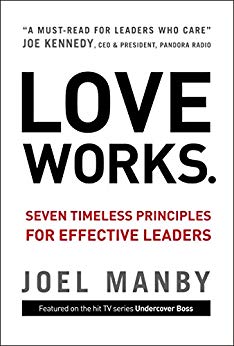
“Love Works” by Joel Manby

As you may suspect from the title, the big idea in the book “Love Works” is about leading an organization based on love. Joel Manby spent the first half of his career in the automotive business, in companies where leadership was based on the command and control model. But when he became the president and CEO of Herschend Family Entertainment, he found a whole different culture built upon the mantra of “Leading with Love,” which guides the way the company treats employees and customers. This book is all about servant leadership, even though that phrase only shows up once in the book, and then only in a graphic about HFE’s culture.

The idea of love is easily misunderstood in today’s modern, American culture. In the second chapter the author talks of the four different Greek words for love – eros, philos, storge, and agape. For sure, when we speak of love in leadership, we are not speaking of the emotion of love, which would describe the first of those three Greek words. The word that guides leadership is agape, the love that is an action which stems from our regard for the other person and seeks the best for them.

Manby then describes HFE’s model of leadership based on seven principles that are paraphrased from 1 Corinthians 13, the “love chapter” in the Bible, which is used so often in marriage ceremonies. The words that he uses are “Love is … patient, kind, trusting, unselfish, truthful, forgiving, and dedicated.”

  • Patient– have control in difficult situations. Here the author speaks mainly of patience in the feedback process. The advice is not to be patient with poor performance but, rather, to be patient with how you respond to that poor performance. Praise more than you admonish and praise in public, admonish in private.
  • Kind– show enthusiasm and encouragement. The customer’s experience is impacted greatly by the attitudes of employees, so extending kindness and demonstrating enthusiasm to your team results in kindness and enthusiasm shown to your customers. Provide words and notes of recognition and appreciation to encourage and validate positive behaviors.
  • Trusting– place confidence in others. The author speaks here of the decision-making process and the need to get input and keep the appropriate people informed. This includes delegating and listening. He states, “Listening carefully is a sign of trust. Interrupting people is a sign of distrust.”
  • Unselfish– thinking of yourself less and focusing on others. Here he speaks of giving of your time, talent, and treasure to help others and describes many ways to do so. The HFE organization has an employee-funded foundation to help fellow employees through difficult circumstances.
  • Truthful– define reality corporately and individually. Honesty is always the best policy. The author describes the need for candor in all discussions and the importance of also being open to the truth as a leader.
  • Forgiving– release the grip of the grudge. Manby states, “The longer you hold a grudge, the longer the grudge has a hold on you.” He urges leaders to forgive people who have wronged the organization as well as people who have wronged us personally.
  • Dedicated– stick to your values in all circumstances. This is the concept that we have termed as integrity or as congruity, the idea that our values are firmly rooted and guide us unswervingly.

For sure, every company needs to have financial goals. Leaders are stewards of the organization and profitability is how we assure that the organization survives and thrives in its mission of serving customers and employees. But Manby and the HFE organization makes a strong case that being a good financial steward and the culture of “leading with love” fit hand in glove in achieving true success.

Fostering a Culture of Collaboration

“Leadership is about solving problems and unlocking the potential in others.” In an article, titled “Redefining Leadership”, in the Stanford Social Innovation Review, Carly Fiorina, the former CEO of Hewlett-Packard, describes some of the traits that she thinks important for today’s successful leaders and how they solve problems and empower others. Ms. Fiorina has always been a big promoter of the value of diversity and she makes that point here. But the two characteristics that she describes as most important for developing this culture of collaboration are humility and empathy, two of the most important traits of servant leadership.

She states, “success requires that you make a proactive, conscious commitment to a culture of humility, and you should take steps to explicitly and implicitly reinforce those ideas for yourself and your team.” Humility is best described as the recognition of the importance of others and the author points out that today’s popular culture of instant gratification and self-promotion is just the opposite of humility.

The author then describes empathy as a natural outflow from humility. She describes empathy as “identifying with what someone else is going through and has gone through—feeling what they are feeling, relating to them, and understanding their motivations.” By understanding where people are and where they come from the leader is able to help them reach their maximum potential.

See the full article for more detail.

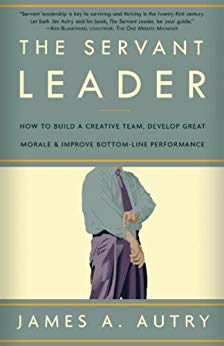
“The Servant Leader” by James A. Autry

This book, “The Servant Leader: How to Build a Creative Team, Develop Great Morale, and Improve Bottom-line Performance,” by James A. Autry, is very much a how-to book, describing the way to implement servant leadership in many aspects of leading an organization. James Autry was president of the magazine group for Meredith Corporation and later a business consultant and speaker.

The author begins with a list of five attributes that describe servant leadership. A servant leader must –

  • Be Authentic – be real or be who you are in every situation. This includes the concept of honesty and integrity, not fudging or giving yourself some wiggle room around the truth.
  • Be Vulnerable – being honest with your feelings in the context of your work, being open with your doubts and concerns about an idea, and being able to own and admit your mistakes.
  • Be Accepting – assigning value to and accepting every person around you regardless of style or personality. This doesn’t require accepting every idea or never disagreeing, but refers to accepting of the person.
  • Be Present – be fully available and attentive in human interactions. Be centered rather than distracted or attempting to multitask.
  • Be Useful – in other words, be a servant. Be a resource for your people, helping them to be productive and successful.

With this foundation defining servant leadership, the rest of the book applies these traits to the daily practice of leadership. An overarching principle of the book is that servant leaders guide their team or organization to also practice servant leadership principles. Therefore, the team members, following the example of the leader, serve each other.

The book is divided into four parts, with the first devoted to describing servant leadership as noted above. The second part describes how servant leadership shows up in the daily activities of the leader such as hiring people that will fit with the culture of servant leadership, building servant leadership practices into the organization, and managing performance through job descriptions, performance standards, and performance appraissals in a way consistent with the principles.

The third part of the book suggests methods consistent with servant leadership principles in dealing with issues that arise in leadership. This includes dealing with organizational issues such as firing people, closing or relocating operations, or re-focusing a business; personal issues such as dealing with illnesses, either of employees or within their families; or legal issues such as lawsuits and harassment.

The fourth part of the book deals with the circumstances in which servant leadership can be put to the greatest test such as during economic or market downturns, in dealing with the balance between work and family, and dealing with conflict. In discussing conflict the author presents a number of tools for identifying, preventing, and encouraging resolution of conflict.

The servant leader is a steward of both the organization and the people within the organization. As such, he/she is frequently in the position of weighing the interests of various parties versus policies and practices of the organization. The author makes the point that dealing positively with people is most often the best choice for the long-term health of the organization. A servant leader leads in such a way as to build community of service within the organization that leads to a healthy and productive team.

This is a good book on the subject of servant leadership with lots of practical advice and examples of application.

Ask, Don’t Tell

One of the best ways for a leader to empower team members or the team is to adopt the practice of “ask, don’t tell.” This concept, sometimes called coaching for performance, moves decisions or solutions from solely the leader to a shared process between leader and team member. “Ask/ don’t tell” is a fundamental skill for coaching but also for leadership. Leaders should often wear their coaching hat when interacting with their team members to develop and to draw out their team members.

It is a human tendency, and especially true for leaders, that we tend to give solutions. We even give solutions when they aren’t requested or desired. Reference any recent discussions with your spouse or children. In the workplace, leaders are quick to give direction and solutions for a number of reasons:

  • It is a developed habit.
  • The hierarchy dictates that the answers come from above.
  • A need or desire to hold the power.
  • It seems the most expedient route to cut to the chase and provide the solution.
  • The leader believes in his/her experience and expertise to provide the “right” answer. (Call it self-awareness or call it arrogance. There is a fine line.)

Breaking the habit and switching to a practice of “ask, don’t tell” probably takes some effort and time.

To implement the “ask, don’t tell” practice means responding to requests for direction or a decision with a question like, “What are some of the options that you are considering?” or “What would you recommend in this situation?” This should lead into some follow-up questions regarding the thoughts behind the choices or the pros and cons of various options, questions like “What are the costs and benefits of these alternatives?” or “What information do you need to gather for making a decision?”

Using the “ask, don’t tell” practice doesn’t mean that the leader abdicates the responsibility for the decision. It simply means that the leader is willing to share the power. If the recommendation that results from discussion and the flow of questions is of equal value to what the leader would have decided, both parties can be satisfied. If the leader is not comfortable with the team member’s recommendation, further questions can be used to dig deeper and resolve the difference in thought. In any case, the leader maintains the responsibility for decisions from his/her team and may need to overrule.

A similar thought relates to meetings. How often do we see the attendees at a meeting posturing their comments as they attempt to determine where the leader will come down? Historically it was often only the opinion of the leader that mattered in a meeting. An effective leader turns this dynamic on its head by only asking questions, drawing out the thoughts of all attendees. Only when the entire team has weighed in and all available information is on the table, will the leader speak. Decision-making becomes a group process. Not necessarily a democracy but a process in which all participate.

The practice of “ask, don’t tell” provides several benefits to the organization and to the team:

  • It empowers team members. Sharing the power that may have been historically held by the leader lets the team members feel a greater contribution and greater control over their work and their lives. They are valued when their input and opinions are drawn out.
  • It builds a relationship of trust and respect. When team members are entrusted with the ability to think deeper and make greater decisions, they feel respected. Leadership is built upon a relationship of trust and respect, but this sort of relationship only works as a two-way street. Therefore, having greater trust and respect for team members comes back around to greater trust and respect for the leader.
  • It develops team members. One of the responsibilities is the development of their people and preparing the next generation of leadership. Drawing out their thoughts through powerful questions develops their thinking process and decision-making skills. As their input is valued, they grow in confidence.
  • It creates better decisions. The “ask, don’t tell” process generates a more robust discussion of an issue, developing different perspectives. In this process, more information is brought to the discussion and decision.
  • It provides an opportunity to evaluate talent and capability. On the other side of the relationship, the “ask, don’t tell” practice provides an opportunity for a leader to see the team members in action as they gather and present logic for decisions. Are these people ready to grow, take risks, and exercise good logic?

The “ask, don’t tell” practice is a powerful way to build the capability of a team and its members. In fact, this practice is effective in building stronger relationships in every part of our lives. It is a better alternative to the practice of constantly providing solutions.

How highly do you value your thoughts relative to those of the people around you? Are you more prone to tell or to ask?

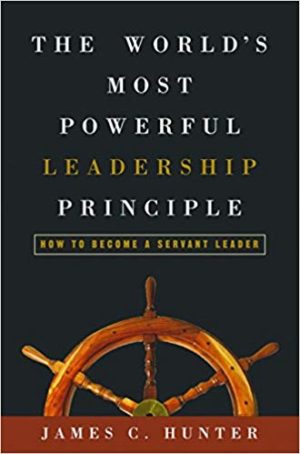
“The World’s Most Powerful Leadership Principle” by James C. Hunter

Jim Hunter’s previous book, “The Servant,” was an allegory that told the story of a business leader whose life was spiraling out of control in every arena. He attends a leadership retreat where the instructor, a former businessman now monk, leads him to realize that true leadership is not built upon power, but on influence or authority, which results from relationships, love, service, and sacrifice.

This second book from Hunter, “The World’s Most Powerful Leadership Principle: How to Become a Servant Leader,” is just that, a how-to book describing Hunter’s thoughts for growing into a servant leader.The goals that Hunter establishes for this book are to: 1) define servant leadership and 2) provide a map for implementation of servant leadership.

The author defines leadership as “the skill of influencing people to enthusiastically work toward goals identified as being for the common good.” The first few chapters discuss the concept of leadership and build out the definition of servant leadership. Leadership is not management and it is not based on power or position. True leadership is influence (the author calls it authority) that is built upon skills and character.

Love is the critical difference that underlies the relationships, service, and sacrifice of servant leadership. This love is not the warm, fuzzy feeling that today’s culture has redefined love to be; rather, it is the other-focused verb that has been the definition of love for eons. The author defines love in leadership as “the act of extending yourself for others by identifying and meeting their legitimate needs and seeking their greatest good.”

The author uses 1 Corinthians 13 to describe the characteristics of love in a servant leadership context. Leadership requires patience, kindness, humility, respect, selflessness, forgiveness, honesty, and commitment. None of these characteristics are soft or wimpy, but are strong and positive.

For most people, the practice of servant leadership requires significant character growth that makes these practices a normal part of daily habits. The author presents a simple model of change or character growth, with three steps. Step 1 is called Friction, where pain or discomfort is felt from the difference between the practices that result from current character and what might result after some character growth. Step 2 is Insight, which involves the development of an understanding of the impact that character growth can produce. Step 3 is the Will = Intention + Actions phase, in which a committed practice of new behavior is used to change character over time.

The author points out that, despite the awesome responsibility of leadership of an organization’s most important asset, many do not see the importance of investing in the development of leadership. Nor do they realize the benefit that results from good servant leadership as it better meets the needs of workers in the organization.

This is a good book that presents servant leadership well. It is always difficult to adequately describe the effort required to make the character change that is often necessary to be effective as a servant leader.

What Is Servant Leadership? – Part 2

Servant leadership turns the old perception of leadership upside down. Instead of being served by his or her followers, the servant leader is focused on serving those whom he or she is leading, helping them maximize their potential in life and on the job. In Part 1 of this article, we described what servant leadership is and made the point that servant leadership is not a set of skills but, rather, is an outflow of the character of a true servant leader.

If servant leadership grows out of the character of a certain sort of person, what are the traits of servant leadership? We can divide the traits of a servant leader into two categories – the internal traits and the external traits.

It takes a certain kind of person to be a true servant leader. Some of the internal traits that are typical of servant leaders are as follows:

  • Self-aware– servant leaders tend to be highly self-aware, know their strengths and weaknesses and comfortable with who they are and who they are not.
  • Mission-driven– servant leaders tend to have a clear understanding of their purpose in life and follow that purpose relentlessly.
  • Forward-focused– servant leaders face the future with anticipation and expectation, seeing what can be with vision and expectation.
  • Competent– servant leaders tend to be highly capable and constantly growing and developing themselves.
  • A person of character – a servant leader is trustworthy, demonstrates integrity and high moral standards.

While these internal traits are often true of any highly effective leader, what really sets a servant leader apart is the way in which he or she interacts or views their relationship with the people around them. The following traits are typical of the relationships of servant leaders with people in their sphere of influence:

  • Humility– servant leaders focus on the other people, not themselves. Their mindset is “you, not me.”
  • Value of people– servant leaders have a general belief in the value of every person. No matter the role or personality of the other, the servant leader sees their value as a created being. Their focus goes beyond the role of the other person; they value the whole person. They express appreciation and demonstrate inclusiveness.
  • Belief in people– not only is every person valued, but the servant leader sees potential in the other person. As a leader, they want each person to find the best opportunity to utilize their potential. They are encouraging and empowering.
  • Stewardship– servant leaders understand the privilege and responsibility of caring for others and contributing to the development of the other person.
  • Development of others– servant leaders make it a priority to help others in their personal growth. They look for potential and bring it out. They multiply themselves by developing leadership within others.
  • Communicators– servant leaders are good communicators. They seek and provide feedback. They seek to hear and know others and they communicate vision and direction.
  • Relational– servant leaders are open and inviting in relationship. They seek to know and be known. They are authentic and empathetic. They care about the other person.

One does not become a servant leader by simply practicing these skills. Rather these practices are a natural way of behaving because of the values and beliefs of the servant leader. If you wish to be an effective servant leader, you must first grow your character into the sort of person that naturally practices these traits.

The natural result of servant leadership is a team that is empowered and cohesive, valuing each other and working collaboratively toward the shared vision.

Is servant leadership a natural pattern for you? Are you growing your character towards becoming a more complete servant leader?

What Is Servant Leadership? – Part 1

Servant leadership turns the usual perception of leadership upside down. The common conception of leadership is a pyramid where the leader sits at the top and the hierarchy below supports and follows the leader. On the other hand, in servant leadership the leader supports those whom he or she leads. Servant leadership can be defined as leading in such a way as to meet the greatest needs and therefore maximizing the potential of those within one’s sphere of influence.

Some people are motivated to lead by a hunger for power or control. Some seek leadership because they desire recognition and what might be considered the high profile of a leadership position. Either of these types of leader is typified by seeking to develop the presence or charisma that leads to the leadership position; their focus is on themselves. On the other hand, a servant leader is most recognized by the humility demonstrated in leading; their focus is on the ones that they lead.

While we can find lists of the skills of servant leaders, true servant leadership goes deeper than a few skills. Servant leadership is an outpouring of the inner traits or character of a person that drives him or her to live in such a way. The most fundamental trait of a servant leader is that of valuing and believing in other people. This, after all, is true humility. Someone once said, humility is not thinking less of yourself, rather, it is thinking of yourself less.

The idea of servant leadership is not new. We can find the idea throughout history. In the Gospel of Mark, the concept of servant leadership is described in the tenth chapter, “42 And Jesus called them to him and said to them, “You know that those who are considered rulers of the Gentiles lord it over them, and their great ones exercise authority over them. 43 But it shall not be so among you. But whoever would be great among you must be your servant, 44 and whoever would be first among you must be slave (or servant) of all.” (from ESV, published by Crossway Bibles)

The term ‘servant leader’ was coined in the 1970’s by Robert Greenleaf as he proposed it as a philosophy of business leadership. Greenleaf said, “The servant-leader is servant first… It begins with the natural feeling that one wants to serve, to serve first. Then conscious choice brings one to aspire to lead. That person is sharply different from one who is leader first, perhaps because of the need to assuage an unusual power drive or to acquire material possessions…The difference manifests itself in the care taken by the servant-first to make sure that other people’s highest priority needs are being served. The best test, and difficult to administer, is: Do those served grow as persons? Do they, while being served, become healthier, wiser, freer, more autonomous, more likely themselves to become servants?

Servant leadership can be described as stewardship, in which the leader is entrusted with, and accepts a great deal of the responsibility for, the growth and develop of the people whom he or she leads.

We have focused here in Part 1 on the definition of servant leadership. In Part 2 we will dig into how servant leadership plays out in our daily practice.

Are you driven to use others or to serve others as you lead?