Ditch the Annual Performance Review

This article appeared in IndustryWeek and related newsletters in early June 2021 and was in the top 10 of most-read articles for the month of May and into June. The article proposes a more meaningful way of coaching and guiding team members in place of what is often a bureaucratic system of annual performance reviews. Give a read and tell me what you think.

Are You Really Listening?

The most effective leaders are those who are the best listeners. The same is true for the most effective teachers, salespeople, parents, and, for that matter, people. They are experts at listening. They show up ready to do the deep listening necessary to really relate.

Listening is an important part of effective leadership. Indeed, listening is critical to the health and growth of any human relationship. Too often, we humans listen (maybe we should use the term, hear, rather than listen) from a self-centered perspective. How does this affect me? Is there anything here important to me? How can I respond in a way that benefits me? Is there any danger to me in what I hear?

Being understood by others is a basic human need. People feel valued when others seek to know or understand them. This is why listening to understand is such an important skill in relationships; by listening well we demonstrate the value that we place upon the other person. This leads to better communication and also to stronger relationships.

When we think about listening to understand, framing it in the six journalistic questions, that is, who, when, where, what, how, and why, provides a framework for understanding the true content or intent that a person is communicating to us. Some of those questions might seem elementary when we think about a conversation, but we should look at each one more deeply. The “who” is the person that is speaking to us, but in the context of this conversation, who is this person. In other words, what are they all about or what is their nature or personality?  For example, is this a person who demonstrates high anxiety when facing change? The “when” is generally right now; we are most often listening in real time, although we might need to use our listening skills in understanding a voice mail or some other past communication. But think more deeply about the when. What are the circumstances that might be impacting the speaker? Have they just been facing a particularly stressful time? The “where” is often right in front of us, although it could be a phone call or message from some other location, which is also generally known to us. But, thinking deeper, what is the environment that might be impacting the speaker?

Not to totally dismiss the importance of those first three questions but listening to understand leans even more heavily on the remaining three questions – “what,” “how,” and “why.” If we truly want to understand and, in so doing, demonstrate the value that we assign to the other person and what they are communicating, then we must be constantly asking ourselves and answering as best we can these three questions. The process of answering these three questions involves an iterative process of examining, inquiring, clarifying, and confirming throughout the conversation. Let’s look more deeply at how these last three questions define the way that we listen to understand.

What are the words being said? The first and most obvious element of listening to understand is to hear all the words. And for most of us, this is no easy task. After a few words we can easily begin to process a response or a solution. Or even worse, our mind can wander someplace unrelated. We need to be intentional about taking in all of the information being presented. The art of reflective listening can help us process, clarify, and retain the words being said. Reflective listening can also expand the information communicated.

How are the words being said? The words are only a part of communication. How it is being said can often determine the real message. While strolling the streets of Savannah, the statement, “I’m so thrilled to be here with you” can communicate joy when said by your spouse, while the same statement from your teenager while rolling their eyes has a completely different interpretation.

How the words are being said includes understanding both the body language and the emotion behind the words. Dr. Albert Mehrabian, professor emeritus at UCLA who is known for his work in studying nonverbal communications, has described the components of human communication as 7 percent spoken words, 38 percent tone of voice, and 55 percent body language. While those percentages might be argued, it is clear that understanding cannot be based on words alone. The words we hear must be interpreted in the context of body language and tone of voice. The bigger picture sets a context for understanding and interpreting the words.

What is actually being communicated? Combining the words that we hear with the body language and emotion or tone of voice that we observe allows a broader or deeper understanding of what is communicated. This deeper understanding again provides an opportunity for reflection, exploration, and clarification through questions and discussion.

Why is it being communicated? While we may never be capable of fully understanding the inner drives, this question provides the opportunity to move to a much deeper level. It moves beyond what is being communicated to an understanding of motivations, background, mindset, attitudes, or other factors that drive the communication. It sets an even deeper context from which to further interpret the communication. Again, the opportunity arises for further exploration and discussion leading to a deeper level of understanding.

While these elements of what, how, and why may define a path to deeper understanding, they can also sound daunting. How do we grow our listening skills to this depth? As with much of what makes a leader, listening to understand is built on a combination of competency and character. The skill is largely a matter of building the habits of paying full attention to the other and being driven by the questions of “who,” “when,” “where,” “what,” “how,” and “why.” The character part is largely these two traits: placing high value on people and relationships and having a high level of curiosity that can then drive our desire to understand. Building these competencies and character traits enables us to listen to understand, which then leads to the relationship of trust and respect on which effective leadership is built.

Are you a deep listener? Do you listen in the context of what, how, and why? How can you grow your competency and character to be a better listener, i.e., to listen to understand?
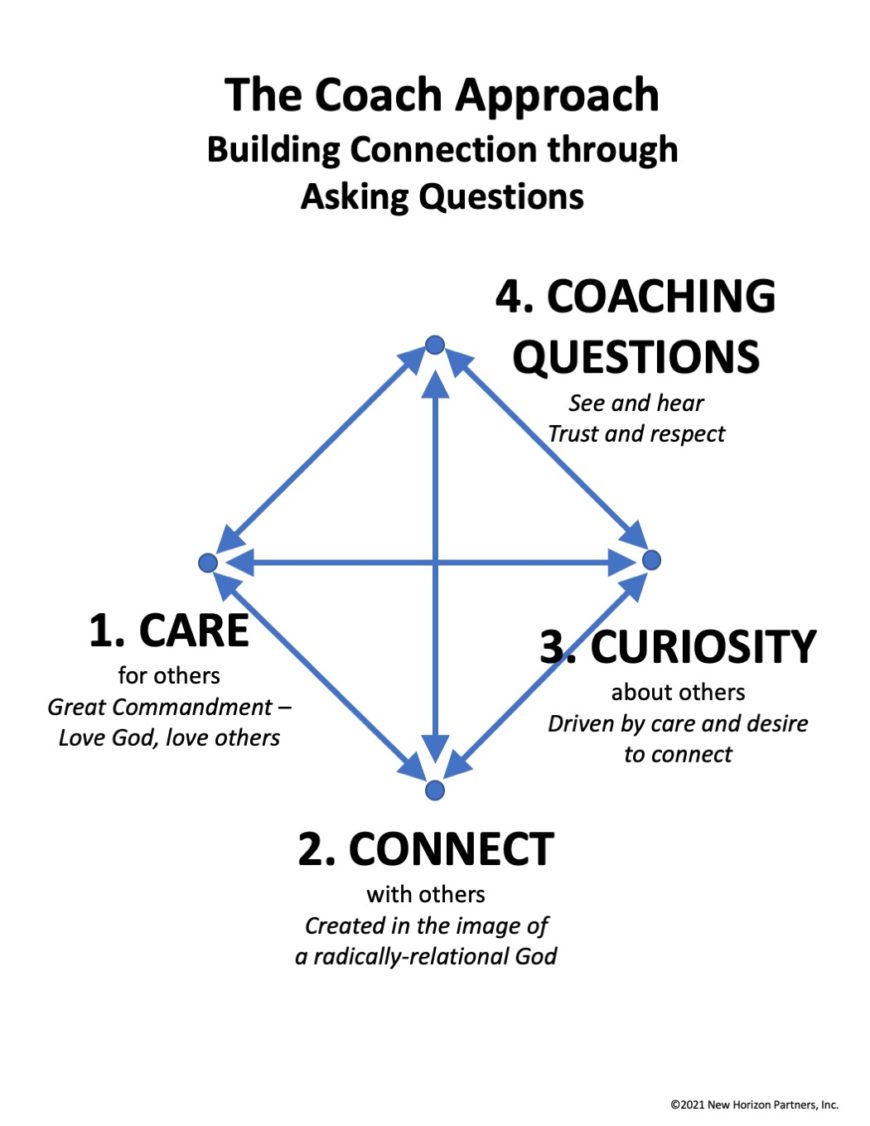
The Coach Approach – Intro

The Coach Approach© is a lifestyle or mindset of utilizing questions in conversations to build relationship and/or to help others to grow. It is an other-focused or “one another” approach to relating to the people around us. The Coach Approach could also be defined as “Making a practice of building conversations around powerful questions that are based on curiosity with the goal of building connection and demonstrating care for the people around us.”

This article is an introduction to the concept of the Coach Approach, which is then explained in a series of following articles on specific elements of the concept. The complete list of articles explaining what the Coach Approach is, why it is the best way to build relationship, and examples of the Coach Approach in action is shown later in this article. But first, here is the model of the Coach Approach in action:

Read the full series:

The Coach Approach, Part 1 – The Roadblocks

The Coach Approach, Part 2 – The Motivation

The Coach Approach, Part 3 – The Route

The Coach Approach, Part 4 – The Destination

The Coach Approach, Part 5 – The Coach Approach in Action

The Coach Approach, Part 6 – More of the Coach Approach in Action

The Coach Approach, Part 7 – Lessons from Mr. Rogers

500 Powerful Questions – Sample Questions

Leaders Lean In to Negative Emotions

We all must face negative emotions from time to time. We might get into a discussion with someone who is angry about an organizational decision or we might find it necessary to mediate a heated disagreement between two team members. It’s also possible to find ourselves in a meeting with someone who is just having a bad day and wants everyone around them to experience it as well. While we might prefer positive emotions, negative emotions such as anger, sadness, jealousy, anxiety, etc., are a reality of life. We experience these emotions ourselves as well as interacting with those around us who have their own.

There is a natural human reaction to negative emotions in other people. Our limbic system, the part of our brain that is responsible for reflexes and emotional responses, senses negative emotions as danger. The brain’s automatic reaction to danger is to protect us by choosing one of three possible courses of action – flight, fight or freeze. This explains why, when facing negative emotions, one might instinctively find an excuse to escape the situation (the flight response) in order to avoid the emotion and any discussion of it. The fight response is the natural reaction to fire back in anger when confronted with negative emotions and commonly occurs when anger is the negative emotion being displayed. A fight reaction would typically result in an escalation of the negative emotion. If not reacting in either flight or fight, the third, less common reaction would be to simply freeze, unable to respond in any way.

Leadership is built on a relationship of trust and respect. While the three reactions described above are natural self-protection responses to the danger that our subconscious brain interprets, all three of them have a large potential to damage the relationships leaders have with those around them. Rather than building relationships, these reactions cut off relationships or fire back negative emotions that undermine trust and respect.

To effectively deal with negative emotions, a leader must learn to recognize these situations early and build the capacity to “lean in” to negative emotions. This requires building some character traits and competencies that will help during these interactions. Before we are able to lean in to negative emotions, we must learn to block our reflexive reactions. This requires, first, developing our emotional intelligence so that we are able to quickly and accurately recognize the emotions in others. (This is sometimes called the third domain of emotional intelligence. For more discussion on EQ, see the article from May 2017.) Once we are able to identify the negative emotions in others, the second skill that we need to develop and utilize is the ability to keep the limbic system from taking control and, instead, maintain control of our reaction through the thinking part of our brain, the pre-frontal cortex. This is a matter of developing the habit of analyzing and responding with thought in emotional discussions, rather than allowing our reflexes to take control.

Developing the ability to lean into negative emotions may also require some character development, as we need to value the people with whom we interact, value the relationship, and have the courage to face difficult discussions. If we value the people and the relationship, we will have a natural curiosity about what is happening within the other person. With the character traits in place that enable us to lean in, the next components are developing the communication skills to effectively enable us to explore and understand the emotions that we are facing and the story behind them.

The actual process of leaning in involves acknowledging the emotions, asking questions to gather an understanding, validating the emotions, and verifying our understanding. The leaning in conversation may start with a statement such as, “I can see that you are angry about the decision to ___; please tell me more about why this bothers you.” From there, you might ask some follow-on questions to deepen your understanding. Validate feelings through statements like, “I see that the impact of ___ might make you feel ___.”

Validation during the leaning-in conversation does not mean that we agree with the emotion or with the story that is in the other person’s mind. It is simply an expression of understanding. The leaning-in conversation should not be an effort to refute or reverse the negative emotions. An implication that the person is wrong for having these negative feelings is counterproductive or even destructive. Emotions are not wrong, they just are. The conversation to understand can help the other person to process those emotions. Defending ourselves or other people during this conversation is also counterproductive. There may be an opportunity to clarify facts during the discussion, but the focus of the conversation must be first and foremost, to understand the emotions and the story that lies behind them.

By leaning in to negative emotions, we as leaders demonstrate our humanity and our care for the other. This builds relationship. Gathering an understanding of what lies behind the emotions will help you as a leader to resolve any current issues or to be cognizant of potential issues in the future. In the process, the conversation is likely to diffuse some of the negative emotions, proving that leaning in pays off in many ways.

Are you able to lean in to negative emotions? What are the ways to grow in this ability?


(Note: This article, or one very similar, was originally published in a monthly leadership blog that I wrote for PolymerOhio Manufacturing Solutions.)

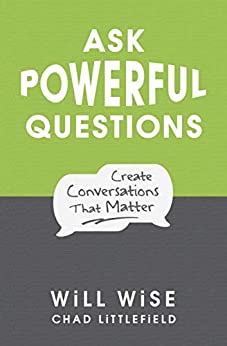
“Ask Powerful Questions” by Will Wise

While the title of this book makes it sound like a coaching book, it is more about a lifestyle or a process of building meaningful relationships. Ask Powerful Questions: Create Conversations That Matter is a book written by Will Wise along with Chad Littlefield. The book presents guidance for “asking intentional, empathetic questions that are rooted in our natural, genuine curiosity and followed up with deep listening.” Such questions, done well, lead to deeper conversations, better understanding, and stronger relationships.

The book is structured around a pyramid of ever-deeper skills that can develop the ability to ask these powerful questions, and more importantly, to develop a mindset that prompts one to ask questions rather than providing self-centered information or opinions. The pyramid has five levels of skill development that the authors believe to be necessary in developing the skill of asking powerful questions. Beginning at the bottom, or foundational, level of the pyramid, the five levels are as follows:



Intention (The Power of Clear Intention) – “I am willing to know you”
The authors claim, “You can only unlock the true potential of your questions by first being clear about the intentions you’re setting forth both for yourself and in sharing with others.” There are two levels at which we need to consider intention. First, as a questioner, we must understand and be driven by intention that is driven by curiosity and understanding, not some subterfuge or effort at manipulation. Also, the recipient of our questions must have an understanding or comfort with the questions’ intention. This might be inferred as part of a conversation but might also be a clarifying statement by the questioner.
Rapport (The Power of Being Present) – “I see you”
Rapport means building a relationship of trust. You might be able to ask a simple, yet powerful question of a perfect stranger, let’s say the cashier as you are buying groceries. But to actually develop a meaningful conversation, a certain degree of trust is necessary. So, rapport or connection is a prerequisite, but connection is also generally the result of a conversation driven by powerful questions.
Openness (The Power of Being Open) – “I hear you”
Of course, powerful questions are open-ended questions. But this openness, as the third level in building the pyramid, refers to our approach to a question; there is a requirement to be open-minded if we are truly asking powerful questions. This means that we are willing to receive and accept any answer without judgment and without any sense of the “right” answer. At this point in the book, the authors caution against using questions that begin with the word, “why,” and also against using questions that include the word, “you.” Both of these words can easily prompt defensiveness in the recipient.
Listening (The Power of Reflective Listening) – “I get you”
There is no power in a question if we are not ready to devote all of our attention to the answer. In this chapter of the book, the authors spend some time describing deep or active listening. They provide some powerful tools for reflective listening and break them various reflective listening methods.
Empathy (The Power of Connection) – “I feel with you”
Empathy can provide power behind the connection. The authors compare empathy with apathy and sympathy and state, “Choosing empathy allows the relationship to move toward connection, allowing for compassionate action. Apathy and sympathy can have the opposite effect and actually pull people apart.”

Throughout the book, the authors identify the traps that inhibit our powerful questions, a potential antidote for the traps, and tools to overcome or avoid the traps. At the end of each chapter presenting the skill levels of the pyramid, there are practical exercises to build the skill. Throughout the book, the authors cite research to reinforce the importance of these skills and offer relational and practical wisdom.

This is an excellent book with very practical advice about asking powerful questions. These powerful questions can assist us in developing great conversations and in building stronger relationships in any part of our life.

Effective Leaders Know Their Team Members

Building relationships is a skill possessed by effective leaders and it should be utilized first and foremost with the leader’s own team members. Trust and respect are not easily given away by most people, but they are the very relationship traits that must be earned by leaders and team members alike. Only once that relationship of mutual trust and respect has been earned will team members accept the influence of a leader. To achieve mutual trust and respect, both parties must know and be known by the other.

Knowing your team members is much more than recognizing a face or knowing a name. Knowing a person in the work setting means that you understand who they are, what motivates them, their strengths and weaknesses, and some of their personal story. The unfortunate reality is that often managers only learn this type of information through an exit interview. Only after it is too late, do we discover that we failed to motivate a person, or that we never recognized a skill or passion that some new employer will tap into, or that the team member had a personal struggle that conflicted with their ability to perform to our expectations.

In the day-to-day activities of an organization, a manager might not recognize the importance of knowing their team members and building relationships. They spend their time dealing with issues, schedules, meetings, staffing, production, reports, and other tasks that seem pressing. Or they simply haven’t recognized the importance of building relationships as a prerequisite for influence.

A true leader recognizes that you manage things, but you lead people. And you lead people by developing such relationships. One somewhat popular philosophy is MBWA—or “management by walking around”—in which a leader prioritizes the time to observe and interact. A part of MBWA is engaging in casual conversations with people in the organization to develop relationships and a knowledge of the team members. Some organizations have actually incorporated a “stay interview” into their management systems so that they do not wait for the exit interview to develop a knowledge of their team members. It seems that caring personally about the people in our organization should not require the creation of a bureaucratic system. It should be a part of normal human interaction.

The first step to getting to know your team members is to recognize the importance of it and place a priority on doing so. In a small business, the leader might build a knowing relationship with everyone in the organization. In larger organizations, the leader certainly wants to know well all of their direct reports and have a good knowledge of the people at the next level in the organization. Building this knowledge is best done through a series of casual conversations that might be a part of periodic one-on-one meetings or could be intentionally more casual.

In developing our knowledge of our team members through casual conversations, we might want to ask questions such as these examples:

  • What makes you excited about coming to work in the morning?
  • What do you enjoy most about your current work situation?
  • If you won the lottery, what would you miss the most about coming to work every day?
  • If you had a magic wand, what would you change about your current job?
  • What is bothering you most about your job these days?
  • What did you love about your last (or a previous) position that you are missing these days?
  • How would you describe an ideal boss?
  • What would make you most proud and how would you want to be recognized for achieving it?
  • What are the reasons that you might use to persuade a friend to come to work here? Or to not come to work here?
  • Outside of work, what makes you happiest or most proud?
  • What are you typically thinking about on your way to work? And on your way home?

These are just examples and the range of discussion can be broad. Throughout this conversation, a follow-up of “And why is that?” or “Tell me more” builds real depth and value. Obviously, for such a conversation to be effective requires that there is already a relationship of authenticity and trust between both parties. If you are reading questions from a form and writing verbatim responses, then your heart is not in it and it is probably a waste of time. There is also a fine line between developing an understanding of the person relative to the job and digging into personal information where a leader has no business. A leader can offer caring support for personal struggles but must guard against developing emotional attachments that are out of bounds.

The obvious benefit of knowing our team members is that we, as leaders, can help them be both more productive and more satisfied on the job. We can give the new project to the person who hungers for challenges and ask the person who loves the routine to manage the administrative or routine tasks. We can tailor our leadership style to be responsive to both those who desire more autonomy and those who are uncomfortable with the unknown. In the end, we all win through the building of authentic and trusting relationships.

How well do you know your team members? Could you predict some or most of the answers to the questions above?


(Note: This article, or one very similar, was originally published in a monthly leadership blog that I wrote for PolymerOhio Manufacturing Solutions.)

Leading by Listening – Part 2

Listening builds strong relationships. In the first part of this article, we focused on the importance of listening in team settings. Teams are more effective when the leader facilitates group discussions in which the entire team is working together to build a strong, shared knowledge base. In this second part, our focus is on the importance of listening in building interpersonal relationships, one-on-one listening.

Effective leadership is built upon a relationship of mutual trust and respect. Leadership is a gift given by followers only upon the development of this relationship of trust and respect. Listening is one of the most important tools in building such relationships; it is one of the best ways to demonstrate respect for the other.

In our busy lives, it is too easy to rush from one task to another and from one meeting to another, without spending the time to know and understand the people around you. When we rush past the people around us, be it team members, coworkers, or our spouse, we give the impression, perhaps only subconsciously, that they are not important enough to be heard or understood. (That might even be built on a character flaw of a lack of humility or respect for those around us.) On the other hand, if we truly desire to build or grow in relationship, we must develop our understanding of the other person. This includes an understanding of such things as what is important in their lives, where are their struggles, how do they think, how satisfied are they with themselves or their situation, etc. We can develop this understanding only through conversation, with an emphasis on listening to their hearts. This is a deeper listening than simply hearing their words but requires perceiving or drawing out their thoughts and emotions.

Even on a day-to-day basis, drawing out input from individuals on suggestions, conditions, and so forth, even just a “hey, how are you doing?” conversation, provides a feeling of inclusion and being valued. Such conversations build relationship and job satisfaction.

The basic ingredient in these efforts to build relationship is listening. This listening requires the following ingredients:

  • Investing the time. It does take time to stop and have a meaningful conversation with the people around us but, if it is considered an investment, it will pay back with interest over time.
  • Demonstrating a sincere interest. This interest is driven by positive character traits such as recognizing the value of each individual and considering relationship and the development of people as highly important.
  • Listening to understand. Effective listening requires the development of specific skills in which we seek to explore and discover the deeper meanings behind the thoughts and words of the other.

Do you consider listening to others to be of importance? What skills or tools have you developed, or do you need to develop, to do so effectively?


See another article on a similar subject, “Be Quick to Listen.”

Fear of Conflict

As a leader, it is often necessary to lean into conflict. This conflict might be based on some disagreement that someone has with us or it might be a conflict between two team members.

There is great value in having divergent views and seeking truth and full information. In this effort a team might have heated discussions and disagreements. When this discussion is focused on tasks and information, it is helpful and valuable to the organization. However, when the discussion becomes personal and filled with animosity, it becomes negative conflict. This negative conflict becomes a problem for the organization because it produces the following results:

  • Strained relationships and personal animosity
  • Tense atmosphere in the team
  • Waste of energy
  • Break down of communication
  • Reduction in the exchange of ideas and information
  • Diminished trust and support
  • Eroded commitment to the team and organization
  • Decreased productivity and increased turnover

Because of the detrimental effects, an effective leader needs to prevent, resolve, diffuse, or guide the conflict into a positive outcome. This requires that a leader have both the desire and the ability to lean into the conflict.

Unfortunately, many people are unable to lean in because they have a fear of conflict. This fear of conflict can show up in a variety of forms. One reaction to conflict is to up the ante, to overpower the conflict. Another type of reaction is to submit, to attempt to placate or play nice. The most common reaction is withdrawal, to hide from or ignore conflict.

Years ago, I had a first-hand view of weak leadership in the face of conflict. The company’s executive staff was rife with conflict that frequently broke out in staff meetings. The reaction of the company president in the face of conflict was to push away from the table, fold his arms across his chest, and smirk as the conflict rolled on. Reading the body language gave some ideas of the president’s views of conflict.

This fear of conflict often rises out of past experiences. Most often the roots go back to family of origin issues in which conflict was a tool of control that became something to be feared. In many families we seldom saw healthy relationships and did not learn the skills of emotional intelligence. Conflict was allowed to become personal at great cost to those involved. Therefore we may have learned to run from conflict.

The ability to lean into conflict requires authentic emotional intelligence in all four dimensions. A person must be fully aware of their own emotions as they step into conflict, able to manage well their own emotions, aware of the emotions of others, and skilled at managing relationships. With a base of strong emotional intelligence, a leader can lean into conflict using something like the following steps:

  • Recognize the debilitating nature of personal conflict on the organization.
  • Adopt a mindset that the cost of leaning into conflict is less than the cost of letting it continue, i.e., become willing to risk moving in.
  • Confront conflict in an emotionally-healthy manner. Provide feedback that points out the negative impact and the consequences that future conflict will produce.
  • Lead discussions of resolution and relationship building.
  • Model healthy discussion of information and debate of facts without allowing personal conflict, demonstrating respect for all persons.

To get to the position where one is able to implement this plan may first require some introspection and self-awareness to understand his/her mindset regarding conflict and the roots of that mindset. The next necessary level of self-awareness is an understanding of strengths and weaknesses in emotional intelligence. From there, a development plan may be necessary to build the skills and ability to lean into conflict. The most important step is to begin to practice leaning into conflict and then continue building comfort and competency at doing so.

Are you a carrier or a resolver of personal conflict? Are you able to lean into conflict and help others build healthy relationships?

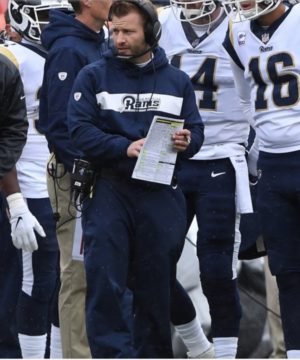
The Impact of Caring Carries this Team to the Super Bowl

“Show your team you care, and they’ll give you everything they have.” This is the philosophy of Sean McVay, the coach of the Los Angeles Rams football team, who is taking his team to Sunday’s Super Bowl game largely because of this philosophy of leadership. Spend the time to know your people, both professionally and personally, and then use your knowledge of them to interact with them. When they see you commit time to building a relationship, they will understand how much you do care. This draws them into a relationship of trust and respect from which they are committed to following. Read the recent article in Inc. to learn more about Sean McVay’s leadership philosophy and the impact that it has had on the team that he leads.

“Radical Candor” by Kim Scott


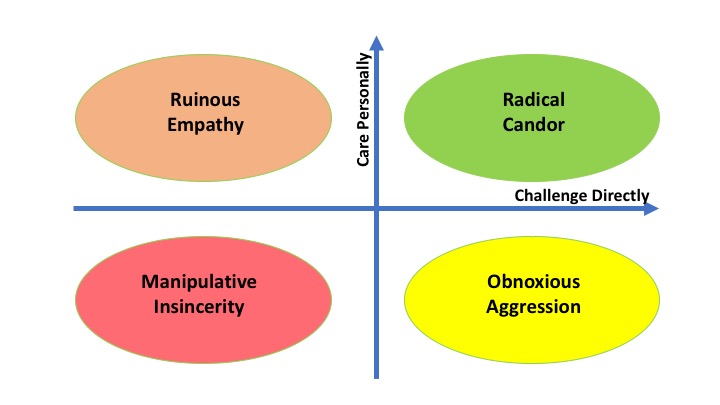
No doubt you heard the advice as you grew up: “if you can’t say anything nice, don’t say any anything at all.” Many people still operate according to that rule even when in a position of leading or directing people. While this advice may work for everyday life, it can be a disaster when adopted by managers. On the other hand, there are some people who, when they have achieved a management position, believe it is their responsibility or privilege to boss people around, demanding that their voice is the only one that matters. This attitude can also be disastrous for a manager. The book “Radical Candor” by Kim Scott proposes a model of leadership based on the idea that the best boss is the one that can “care personally and challenge directly.” When a leader can effectively combine these two skills, they are most effective at influencing, inspiring, developing, and directing their team. Only when we clearly show that we care personally can people accept our effort to challenge directly. And only when we challenge directly are people convinced that we truly do care personally.

My view is that leadership is the ability to influence built upon a relationship of trust and respect. This correlates with the concept of Radical Candor. Trust is built by caring personally. Respect is built by challenging directly.

This combination of caring personally and challenging directly is a balancing process and is modulated by our understanding of the recipient and the way in which they perceive both the caring and the challenging. Challenging, or guidance, is always meant to impact the future of recipient; therefore, it includes both praise and criticism.

When our ability to care personally and to challenge directly is out of balance, the ability to lead can be impacted adversely. Ms. Scott describes the various combinations of caring and challenging as follows:

Obnoxious Aggression is when a boss is prone to criticize without showing that they care about the recipient. The boss comes off as a “jerk” and the recipient is made to feel incompetent.

Ruinous Empathy is when a boss cares so much that they are unable to ever challenge; this is the “when you can’t say anything nice” person in action. It is ruinous because the recipient never is given feedback that will lead to growth.

Manipulative Insincerity is the result of a boss that doesn’t care enough to challenge. The worst version of leadership, this is generally the result of a boss that is only focused on him- or herself. It’s praise that is false or condescending and criticism that is neither clear nor kind.

Radical Candor is the healthy mix of caring and challenging that leads to growth and influence.

The first portion of the book defines and explains Radical Candor, building the case for why it is the best model for today’s leadership in the workplace. In fact, Radical Candor is a concept useful in any relationship or communication. In the process of describing Radical Candor, Ms. Scott further defines caring as understanding what motivates each person on the team through a process of exploration and communication. She also describes the open communication and guidance that embodies challenging directly.

The second half of the book is devoted to demonstrating what Radical Candor looks like in action, presenting advice and tools for the day-to-day practice of leading a team in a Radical Candor fashion. This includes advice on building relationships in the workplace, getting and giving guidance, building and motivating a team, and on getting stuff done, as she describes it. In the chapter on results, the book contains a GSD or Getting Stuff Done model, in which Ms. Scott describes the various types of meetings that she believes a team should utilize and the general steps for accomplishing projects. These steps are: Listen, Clarify, Debate, Decide, Persuade, Execute, Learn, and back to Listen. The advice regarding giving guidance gives some helpful advice on hiring, firing, promotions, and performance reviews. In summary, the Radical Candor model should become a philosophy of interacting with people on our team.

While this book spends considerable describing the actions or skills that result from a Radical Candor style of leadership, for many people the concept of Radical Candor is as much an urging to character growth as it is a recipe for competency. Radical Candor requires a development of relationships that may be a challenge to many people. Yet I believe that effective leadership is built upon such relationships.

I highly recommend this book and the character growth that is required to embrace and live in a Radical Candor fashion.

Are you ready to care personally and to challenge directly as you lead people? What growth do you need to undertake in order to do so effectively?