Good Leadership Requires an Open Mind

While managing people can be described as assigning and monitoring tasks, leading people is based on a relationship of influence that is built upon trust and respect for the leader. Demonstration by the leader of strong, positive character traits is what establishes trust and respect. One of the key traits of effective leadership is openness. American scholar and author Warren Bennis, considered by many to be the pioneer of leadership, describes openness as the ability to listen to ideas that are outside of one’s current mental models, and then be able to suspend judgment until after one has heard the ideas of others. Openness can also be described as the willingness to consider every element of “what is”.

Openness indicates an inclination to accept input from various sources and to make decisions or to make changes based on that input. Establishing openness as a character trait requires the demonstration over time of this willingness to hear, understand, evaluate, and take appropriate action based on input from sources outside ourselves. The full process must be consistently demonstrated. It is not difficult to hear input from others, but properly evaluating and changing course based on the input of others can often stretch us.

Openness keeps us and the organizations that we lead from getting stuck in a well-worn rut. It counters the NIH (not invented here) attitude. It breaks down barriers and sparks innovation and energy.

There are some human tendencies that make openness difficult, and some are especially so for personality types that tend to be leaders. Some of these tendencies are:

  • The fear of not being right. We grow up in a system of “right” and “wrong” answers and tend to believe that we always have the right answer.
  • The fear of risk or failure. Success is good and failure is bad. We tend to believe that being in control avoids potential failure.
  • A need for order and rules. People value routines, traditions, and established practice. Openness requires the ability to embrace doing things differently.
  • A reliance on logic and realism. People make sense of the logical. Sometimes openness requires examining what may on the surface appear illogical.
  • A limit on human relationships. Being busy doing business often means focusing on numbers and processes. Openness requires that we step away from the processes and increase our human interactions.

We can think of openness in three dimensions, all of which the best leaders exhibit. First, we can demonstrate openness about ourselves. Secondly is the ability to accept and even seek diverse input from the people around us. Finally, the third dimension of openness is seeking input from the external environment.

The first dimension, openness about ourselves, requires a strong level of both self-awareness and self-acceptance that tells us where we have the capacity or need to change some part of our character. This input might come from self-examination or from other people. Those with openness about themselves are not only able to accept input from others, but they actively seek feedback. Open leaders want to know how they are perceived and how their communication is received. When open leaders receive personal input, they consider how they can build appropriate change into their character.

The second dimension of openness is the ability to accept input from others regarding organizational direction and decisions. This openness gives team members the ability to freely voice their opinions and to provide any relevant input. Rather than people wondering “which way the wind blows” before speaking up, they know that their input will be accepted and valued.

The third dimension of openness is seeking input from the external environment. This refers to seeking information from a wide range of sources and being creative in making the connections to potential impact or implications for the organization. This requires open eyes and an open mind to recognize important input.

While there are those human tendencies that make some people struggle with openness, effective leaders are naturally open because of the other character traits they possess. If you desire to be more open, the best way to grow openness is to work on improving these other traits in yourself.

  • Be people-oriented. Before we can value ideas from other people, we must first value those people.
  • Be curious. An open mind is a curious mind; look for information and seek input and opinions.
  • Be forward thinking. The closed mind dwells in the past. The open mind ponders the future and its possibilities.
  • Be engaging. Openness draws others into an exchange of ideas.
  • Be inspiring. Expressing the desire for and the value of the thoughts of others makes them feel respected and lifts them up.
  • Be credible. Seeking the best input from all available sources and not just relying on our own thoughts gives confidence to the team that we are able to lead them to a positive future.
  • Be engaging. Openness infers a frank exchange of ideas that requires a dialogue of exploration and evaluation.
  • Be responsive. Expressing the value of the ideas and appreciation for them demonstrates the open mind and open heart of a leader.

Openness is a process as well as a choice, requiring a level of both confidence and vulnerability. It often necessitates some transformational growth. It also requires consistent practice to build an environment in which people recognize and are willing to step into the openness. It is a choice because it requires stepping out of a leader’s comfort zone. In the busy flow of business, it requires that one take time to seek input, to weigh its value, and to appropriately change course.

The culture of an organization generally reflects the character of its leadership. Openness on the part of the leader demonstrated over time develops into openness in the organization. As this openness is woven into the fabric of the organization’s culture, it breaks down barriers and encourages collaboration. The best ideas from within the organization then surface to improve products and processes. As they do so, the organization becomes a more satisfying place to work.

Are you able to keep an open mind in most situations? Where do you find this challenging?

(Note: This article, or one very similar, was originally published in a monthly leadership blog that I wrote for PolymerOhio Manufacturing Solutions.)


Just the Way They Are

Meeting for breakfast with a friend and former co-worker recently, the conversation turned to a certain leader with whom we were both familiar. This leader had built a family of successful companies. It was easy to attribute the success of these companies to the culture and, in turn, to trace the culture to the character of this leader. The companies were all successful because the people within them worked hard to make them successful and they worked hard because they would follow this leader wherever he asked them to go. We observed that the people in all of his companies were eager to follow him because of his great leadership and that this leadership was not something that he had needed to learn. Almost in unison we both said, “The way that he leads is just the way he is.”

With so many of the great leaders that I know, their leadership feels easy to them because the way that they lead is just a natural result of who they are, or the character within them. Their leadership is easy for their followers to accept because it is clearly authentic, the way that they behave is who they really are.

What are some of the characteristics of these great leaders? Here are a few of the most important traits of some of the great leaders that I know:

They are authentic – Great leaders don’t need to learn a bunch of leadership skills. When they come to work in the morning, they don’t need to put on their leadership hat. Great leaders lead from who they are. They have characters traits that lend themselves to building relationships and demonstrating that they are genuine in caring about the about the people around them. On the other hand, authentic leaders are easy to follow because their team members know that they are genuine. Team members can trust these leaders because they know that what they see on the outside is who the leader is on the inside.

They are humble – Great leaders naturally stand out from the crowd but they don’t regard themselves as above the people around them. They are quick to give credit and show appreciation for all that is done by others. They are willing to roll up their sleeves and do their part in any task. Team members therefore feel valued as equals.

They respect and value others. – Closely related to humility, great leaders demonstrate their respect for each person. When interacting with those around them, they are interested in the whole person, both in the part that comes to work and the part that lives outside the workplace. Great leaders understand and accept the strengths and weaknesses of those around them and know what is important to them. Great leaders genuinely care about the person within each team member, so they have an interest in their family, their health, their satisfaction, and their long-term career development.

They demonstrate high emotional intelligence – Great leaders are strong in all areas of emotional intelligence – understanding and managing their own emotions, understanding the emotions of others, and building or managing relationships. This may be a natural outflow of the value that they place on others, but great leaders have a way of being aware and in control of their own emotions and are adept at finding ways to relate positively with those around them.

These four traits seem to be foundational for great leaders. Other important traits are natural extensions of these four, qualities such as honesty, integrity, trustworthiness, openness, conscientiousness, and so on. And, of course, great leaders of organizations also demonstrate high intelligence, strong common sense and wisdom, and decisiveness.

Great leaders often make leadership look easy and natural because it simply flows from who they are. If you do not yet have these same character traits, they can be developed with some deep character work.

What other traits do you see in great leaders? Where do you stand in terms of these traits?

The Problem of Arrogance

One of the primary reasons for the downfall of many leaders is the problem of arrogance. Arrogance defeats leadership in many ways, especially in these two: 1) arrogance inhibits a person’s ability to learn or take in information and 2) arrogance inhibits a person’s ability to build meaningful relationships with others.

Arrogance has these two definitions in the Merriam-Webster dictionary: 1) exaggerating or disposed to exaggerate one’s own worth or importance often by an overbearing manner and 2) showing an offensive attitude of superiority. Arrogance is very much the opposite of humility.

It is easy for a leader to fall into the trap of arrogance. First of all, the leader is placed in a position within the organization above others. He or she most probably has been elevated in organizational position above one-time peers, often many times. Both the position and the process of being elevated can go to one’s head, making him/her begin to believe that they are superior in some way (or in many ways) compared to others. Arrogance is a mindset as well as a character trait.

The first problem with an arrogant person is that they begin to believe that they are always correct and that they have all the answers. When someone begins to think this way, they no longer need to take in more information. They ignore or dismiss the input of those around them. By ignoring information, the arrogant person becomes just that, ignorant. They stifle the conversation around them and force others to accept their viewpoint. In doing so, the arrogant person can easily miss out on important information or alternative viewpoints, thus jeopardizing their decision-making process.

The second problem can be a corollary to the first. An arrogant person dismisses information from others and, in doing so, is perceived as dismissive of the other person. By human nature, we are not likely to build a relationship of trust and respect with a person who is dismissive of us, who shows no value for us. People only follow a leader when there is an established relationship of trust and respect. Therefore, the arrogant leader cannot inspire others, they can only rely upon command and control.

Arrogance should not be confused with confidence or self-esteem. Self-esteem is a realistic respect for or favorable impression of oneself. Confidence is a realistic belief in oneself and one’s powers or abilities. As a leader, we can be aware of the special gifts and abilities with which we have been endowed while still being open to listening and learning as well as valuing the person of those around us. Confidence is one of the character traits that make a leader effective as opposed to arrogance, which will make a person ineffective.

Arrogance is the opposite of humility. Where arrogance dismisses or devalues those around us, humility regards others as of equal value. Human value is not a function of either position or gifting.

“When pride comes, then comes disgrace, but with the humble is wisdom.” Proverbs 11:2 (ESV)

Arrogance is a trait that can creep up on us, so we need to be aware and vigilant that it does not overtake us. If you find yourself feeling increasingly arrogant, be quick to stomp it out. Here are some possible ways to keep arrogance at bay:

  • Be vulnerable and authentic. Be quick to recognize and admit mistakes. Be quick to seek the input and advice of others.
  • Practice humility. Express the value that you see in those around you. Recognize that many of your gifts and talents are not of your own doing but are provided to you by your Creator.
  • Be vigilant for any expressions of arrogance. Catch yourself and examine the impact that any signs of arrogance have on your effectiveness and your relationships.
  • Keep a journal of daily successes and failures and successes and failures. Use it as a guide for reflection and for setting personal development goals.
  • Ask those that are close to you to hold you accountable. The simple act of asking for accountability will heighten your awareness.

Remember that effective leadership is built upon relationships of trust and respect. Humility is one of the traits that build these relationships and arrogance is like dynamite, destroying relationships and our ability to lead.

Do you show signs of arrogance in your leadership relationships? What are you doing to tame that arrogance?

The Impact of Caring Carries this Team to the Super Bowl

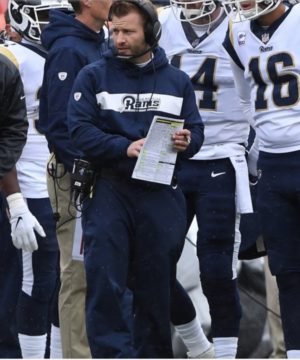
“Show your team you care, and they’ll give you everything they have.” This is the philosophy of Sean McVay, the coach of the Los Angeles Rams football team, who is taking his team to Sunday’s Super Bowl game largely because of this philosophy of leadership. Spend the time to know your people, both professionally and personally, and then use your knowledge of them to interact with them. When they see you commit time to building a relationship, they will understand how much you do care. This draws them into a relationship of trust and respect from which they are committed to following. Read the recent article in Inc. to learn more about Sean McVay’s leadership philosophy and the impact that it has had on the team that he leads.

Get Real!

Authenticity brings the real person.

Authenticity is defined by the Cambridge Dictionary as “the quality of being real or true.” It is also frequently defined as being genuine or worthy of belief. Of course, the opposite of being authentic is to be inauthentic, which would be false, fake, or untrue.

Authenticity is one of the most important character traits of an effective leader. Without authenticity there is a chasm between the ingenuine leader and the reality of the lives around him/her. Our ability to lead effectively is built upon a relationship of trust and respect. But the gap that results from the lack of authenticity makes it impossible to build this relationship. On the other hand, authenticity in the leader draws followers into relationship, establishing the foundation for influence and motivation.

While authenticity may be one of the most important character traits of leadership, it is also one of the most easily compromised character traits. Developing a strong level of authenticity is challenging. There are two general reasons that leaders struggle to incorporate authenticity into their character.

The first hurdle is a cultural bias against authenticity. We grow up being told to “grow up”, to “be strong”, not to show emotions, to “never let them see you sweat”, etc. We develop the perception that a leader must be a superhero, never making a mistake, never feeling pressure, always upbeat and charging forward. Being genuine is devalued in our culture, while success, achievement, and avoiding criticism are highly prized. Then, when we are in a position of leadership, we subconsciously try to play this role.

The second reason that leaders struggle with authenticity is fear. Because of fear people develop self-limiting beliefs. Their subconscious self tells them not to say something because they might be judged and found unacceptable or less than what they should be. Or they fear the perceived embarrassment of a potential failure or mistake. Because of these self-limiting beliefs, people bring less than their real selves to their leadership relationship.

What are the elements of authenticity in leadership? What does authenticity look like in practice?

Self-awareness and self-acceptance – a prerequisite for being real is first knowing what is real. Authenticity requires that the leader know themselves well and are comfortable with who they are and who they are not. This doesn’t mean that they aren’t seeking growth and change within (leaders are learners and continually seek personal growth), but it means that they don’t feel the need to hide who they are and their strengths and weaknesses.

Integrity – leaders with authenticity are very clear about their values and their thoughts and actions are consistent with their values. People around them can recognize the leader’s values by their actions. The leader with authenticity has a consistency in their actions and decsions because they are all based on clear, positive values.

Emotional awareness – a part of authenticity is emotional intelligence, especially emotional awareness and the ability to manage emotions appropriately. Leaders with authenticity do not feel the need to always hide their emotions, rather they are able to recognize and appropriately share them with those that they lead.

Thoughtful and caring – in the other half of emotional intelligence, leaders with high authenticity are strong in their awareness of the emotions of others and their ability to be appropriately empathetic. As part of this, he/she is able to listen well to others, even when there is strong emotion or disagreement.

Accepting, admitting, and learning from mistakes – an important part of being real, is understanding that we are not perfect. A leader with authenticity is always ready to admit his/her mistakes and even to take responsibility for the mistakes and failures of the team that he/she leads.

Truth and transparency – authenticity is truth. This means that the leader with authenticity is ready to speak truth and present facts and opinions without fear. The self-limiting beliefs are overcome with the ability to vulnerably speak truth.

How do we develop this high level of authenticity? Building character traits like authenticity is not like building a skill. Building character is a matter of changing on the inside. It requires understanding the current state, the desired state, the gap to be bridged, and then building practices into our lives that transform the way that we think and act to the desired state.

Without a high level of authenticity, a leader does not bring his/her real power to leadership. The fear or inability to fully bring our truth and reality leaves us separated from those we lead. Authenticity is a requirement for a strong leadership relationship.

How authentic are you? What are your challenges to becoming more authentic?

Competency and Character

Great leadership is based on a combination of both strong competencies and excellent character. The best skills without the positive character traits leaves people cold. Great skills alone can obtain results for the short term but a stressful or highly emotional situation draws out true character and, if that character is weak, will cause followers to not trust and follow. . Great character traits without the skills can make a leader likeable but people don’t see a benefit for the future. Without strong leadership skills, people don’t see enough substance to develop long-term results.

Leadership competency or skills include such things as the ability to communicate, manage change, create a vision, read and understand people, influence others, and negotiate effectively. It includes the ability to digest information and think strategically. Relevant technical and functional skills are important such as scientific knowledge or a strong financial background. Competencies include decision-making and the ability to organize and manage. Competencies in the area of communication include the ability to write or speak clearly and convincingly, the ability to teach, and the ability to organize and manage meetings.

Competencies are learned skills. We develop them through experience, following an example or model, or some education process. This might be from a book or seminar. In a sense, competencies can be viewed as tools in a toolbox.

While competencies are what a person knows or is capable of doing, character is who we are. Character can be defined as the sum of virtues, values and traits. The character of a strong, effective leader includes such traits and virtues as integrity, honesty, confidence, humility, authenticity, passion, selflessness, ethical, and respect for others. Character is built into our lives through our beliefs and the practice of those beliefs over time.

In an effective leader competency and character flow together. It may be difficult at times to differentiate whether actions are based on competency or character. On the other hand, when a person is attempting to lead without a base of both competency and character, it can be both obvious and ineffective. Some further examples of both one-sided and blended actions are shown below.

  • A person with good communication skills can craft a document that presents the facts clearly. A leader with both communication skills and a respect for others presents the facts clearly and in a manner that values the audience and considers the impact and likely emotions of the reader.
  • A person with meeting management skills can organize and conduct an efficient meeting. A leader with both competency and character can conduct a meeting where the attendees feel a part of the process and that their input is valued.
  • A person with the ability to teach others can present information clearly when asked to do so. A leader with both competency and character looks for teaching opportunities in every interaction.

Evaluating and building our competencies can be straight-forward. What skills do we have and where do I need to build more or deeper skills? Evaluating and building our character requires a deeper look and a greater effort as we often actually need to change who we are as we strengthen our character.

Where do you need to grow and what is your plan for doing so?

A Primer on Emotional Intelligence

“What did people do before there was emotional intelligence?” I was asked at a leadership workshop a short time ago. The term emotional intelligence has grown in popularity and become an important concept in leadership over the past twenty years. But before we began using the term, emotional intelligence was a skill of great leaders. We can see references to emotional intelligence from the ancient Greek philosophers and from King Solomon in Proverbs. One of the reasons why Abraham Lincoln is considered to be one of our greatest presidents is because he seems to have had strong emotional intelligence. Dale Carnegie’s classic book, How to Win Friends and Influence People, is full of emotional intelligence.

While emotional intelligence (“EI”) has existed forever, it’s just in the last 20-30 years that it has been labeled, studied, and grown in awareness of its importance in all sorts of social interaction. The term “emotional intelligence” seems to have first been used by Michael Beldoch in a scientific paper in 1964. In 1983, Howard Gardner’s Frames of Mind: The Theory of Multiple Intelligences was an introduction to a different way of thinking about intelligence, including the idea of intrapersonal intelligence and interpersonal intelligence. The doctoral thesis of Wayne Payne, A Study of Emotion: Developing Emotional Intelligence, was published in 1985. In 1989 Salovey and Mayer published a model of emotional intelligence, as did Stanley Greenspan. All of these papers were academic works in the area of psychology and sociology.

The work that really ignited interest in emotional intelligence was Daniel Goleman’s 1995 book, Emotional Intelligence – Why it can matter more than IQ, which reached the mass audience and achieved best-seller status. This book was prompted by the previous academic papers and by the growing ability of neuroscience to actually see and measure the emotional activity of the brain. It spread the idea that emotional intelligence can be important in developing positive relationships, and therefore can impact the quality of any type of social interaction.

Goleman’s book opened the floodgate for a stream of books by many authors and scientific studies and papers postulating and examining the impact of EI. While measuring and comparing EI in individuals is not an exact science (one of the criticisms), it is generally recognized that emotional intelligence contributes to more effective relationships and therefore, better results. Goleman claims that 67 percent of all abilities associated with strong job performance were related to emotional intelligence. Travis Bradberry, the author of Emotional Intelligence 2.0, claims that 90% of top performers at work are also high in emotional intelligence while just 20% of bottom performers at work are high in emotional intelligence. He also claims that 58% of job performance is due to EI. A 2010 meta-analysis conducted by Virginia Commonwealth University and published in the Journal of Organizational Behavior found that emotional intelligence was very important to job performance. Some results from specific studies are as follows:

  • Restaurant managers with higher EQ create 34% greater annual profit growth, increased guest satisfaction, higher employee retention.
  • In a study with naval officers, emotional intelligence proved to be more powerful at predicting leadership efficacy than either IQ or managerial competence.
  • Of the leaders with high emotional self-awareness, 92% created positive workplace climates.
  • After supervisors in a manufacturing plant received training in emotional competencies, lost-time accidents were reduced by 50%, formal grievances were reduced from an average of 15 per year to 3 per year, and the plant exceeded productivity goals by $250,000.
  • Plant efficiency increases by 9.4% during major EQ initiative focused on managers and the creation of vital teams.

Emotional intelligence consists of skills and traits relating to understanding and managing emotions. The various models of EI fall into two camps: the ability model that defines emotional intelligence as a cognitive ability and the mixed model that defines it as a combination of cognitive and learned personal aspects.

The Mayer and Salovey model was the earliest model and defined emotional intelligence in the following four branches:

  1. The ability to perceive emotions in oneself and others accurately.
  2. The ability to use emotions to facilitate thinking.
  3. The ability to understand emotions, emotional language, and the signals conveyed by emotions.
  4. The ability to manage emotions so as to attain specific goals.

The most popular of the later, mixed models are those described by Goleman in Primal Leadership or by Bradberry in Emotional Intelligence 2.0. Goleman labels these as domains, with traits and skills in each domain. Bradberry labels these as skills, with specific strategies in each skill.

  1. Self-awareness
  2. Self-management
  3. Social awareness
  4. Relationship management

In other publications Goleman has used five domains: self-awareness, self-regulation, motivation, empathy, and social skill. Both the Mayer and Salovey model and the Goleman model are hierarchical in that the lower levels are prerequisites for the higher levels.

While some models describe emotional intelligence as a cognitive ability, it is clear that emotional intelligence can be developed and grown through specific effort. The intentional change theory of Richard Boyatzis, referenced in Primal Leadership, is one method. A related tool for growing EI is a cohort leadership group where the group members can provide input into each others’ lives and growth. The general idea behind growing in emotional intelligence is retraining the brain, or developing new neural networks that provide the pathway to responding to emotional triggers in a different, more preferable manner. There are a variety of assessment tools that provide relative measures of emotional intelligence.

Mayer and Salovey defined emotional intelligence as “the ability to monitor one’s own and others’ feelings and emotions, to discriminate among them and to use this information to guide one’s thinking and actions.” Other definitions of EI include “the ability to identify, assess, and control one’s own emotions, the emotions of others, and that of groups” or “the ability to recognize, understand and manage our own emotions and to recognize, understand and influence the emotions of others.”

Since emotional intelligence impacts social interaction and relationships, the development of EI skills can contribute to more effective leadership, marriages, parenting, politics, community, or any other scenario requiring personal interactions. Those with low EI will struggle in awareness or control of their own emotions or will find it difficult to comprehend and deal with emotions in others. On the other hand, those with high EI can function at a higher level in terms of their own emotions and understanding and building effective relationships with those around them.

How effective is your emotional intelligence? How are you growing?

Self-Awareness Is Foundational to Leadership

The traits of leadership are often listed as characteristics such as integrity, confidence, vision, communicator, etc. Seldom do we see on these lists of important characteristics the trait that is foundational to them all – self-awareness. Self-awareness is defined as the conscious knowledge of one’s own capabilities, character, feelings, motives, and desires. It can also be described as the ability to know oneself deeply and to act from that knowledge.

Leadership self awareness New Horizon Partners

The self-awareness that we are speaking of here is personal self-awareness. One of the domains of emotional intelligence is termed emotional self-awareness. EQ self-awareness is a subset of personal self-awareness, which is a broader knowledge of who we are.

Self-awareness can be considered on a spectrum or scale. We probably have met people and later thought that “they haven’t a clue” because they seem so unaware of themselves or aren’t in touch with reality. On the other end of the spectrum are those people that are very comfortable in their own skin, those who are highly self-aware. We cannot be perfectly self-aware because everyone has a few blind spots or things that are buried deep inside them. Even though we can never be completely mindful, highly effective leaders are highly self-aware.

What does it mean to be self-aware? The people who have a clear perception of themselves can agree to a great extent with most of the following statements:

  • I know my strengths in the areas of intelligence, skills, and technical and functional knowledge.
  • I know my weaknesses in the areas of intelligence, skills, and technical and functional knowledge.
  • I am aware of my emotions and able to manage them.
  • I know my emotional triggers.
  • I understand my interpersonal strengths and weaknesses.
  • I can differentiate myself and what I am feeling from those around me.
  • I understand the boundaries where my responsibilities end and the responsibilities of others’ begin.
  • I am aware of my intuition and know the situations where I can trust it.
  • I am able to understand and accept the reality of my personal situation.
  • I am able to understand the cause and effect of circumstances in my life.
  • I am clear on my motives and desires in life, in relationships, in work, etc.
  • In addition to my own perspective, I am able to see myself as others see me.
  • I know roughly where I am on the scale from “haven’t got a clue” to completely self-aware.
  • I recognize most of my blind spots and areas for development.
  • I am continually striving to become more self-aware.

(Download our self-awareness assessment worksheet to evaluate your own self-awareness.)

High self-awareness is a strong predictor of success as a leader. This mindfulness lies beneath a person’s self-confidence, ability to be vulnerable, skill at managing relationships, ability to delegate, self-discipline, and many other elements of effective leadership character and competency. The less clarity we have about ourselves, the more likely that we will stumble along the way.

How does a person grow in self-awareness? To develop a thorough understanding of ourselves requires that we are consistently looking inside ourselves and asking the question, why? We are seeking to know what lies within us and what drives us. To answer these types of questions, assessment tools such as Myers-Briggs, DISC, etc. can be helpful. Seeking the input of those around us with tools such as EQ360 can help to see through the blind spots or provide perspective. Journaling can be helpful in thinking through the “why” question as a person tries to understand themselves more fully. A trusted friend, advisor, therapist, or peer group can help us in digging deeper into who we are and why we operate or behave in certain ways. To be self-aware means to be continually developing our self-awareness, so these tools should be frequently re-visited.

What might be other descriptors of self-awareness? How are you growing in your own self-awareness?

“Integrity” by Dr. Henry Cloud

When we hear the word integrity in the context of character we think of the definition of being honest and having strong moral principles. In his book, “Integrity”, Dr. Henry Cloud uses another definition of integrity, that of being whole or undivided, as in integral or intact. The idea here is wholeness of the person or the character of the person. Character is the most important ingredient of leadership, more important than talent, brains, education, training, or any other component of success. An integrated character determines a leader’s potential to succeed and to avoid the pitfalls that can befall those of lesser character.

character based leadership Ohio

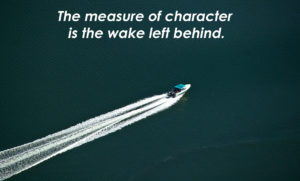
The measure of character is described by Cloud as the “wake” that is left behind us. What do those with whom we interact see us leave behind in terms of tasks and relationships? How positive is our “wake”? Do people feel that they have grown and accomplished much because of us? Or are they glad that they survived with minimal damage?

Character guides our thoughts and behaviors. Dr. Cloud defines character as the ability to meet the demands of reality, a broader definition than sometimes used. Speaking of the various capabilities required to lead, he says that “while you don’t need all the gifts that exist in the world, you do need all the aspects of character while you are putting your gifts to work.” The book is focused on the aspects of wholeness or integrity of character that Dr. Cloud says are critical for effective leadership, as follows:

  1. “The ability to connect authentically (which leads to trust).
  2. The ability to be oriented toward the truth (which leads to finding and operating in reality).
  3. The ability to work in a way that gets results and finishes well (which leads to reaching goals, profits, or the mission).
  4. The ability to embrace, engage, and deal with the negative (which leads to ending problems, resolving them, or transforming them).
  5. The ability to be oriented toward growth (which leads to increase),
  6. The ability to be transcendent (which leads to enlargement of the bigger picture and oneself).”

Dr. Cloud makes the point that the integrity of character means that all of these aspects must work together. “Strengths turn into weaknesses without the other parts of a person to balance them out.” While no one has a perfect balance of these abilities, the gap is their need and opportunity for growth.

Trust is an essential element of a leadership relationship. Without trust leaders cannot influence. Trust is built through connecting, through extending favor, and through vulnerability. Connection is based on empathy. Entering into another person’s reality, validating it, and treating it with respect builds connection. Invalidation destroys connection. Another element of building trust is through extending favor. This is described as being for the other person’s best interest without being dependent upon anything. Trust is also dependent upon a certain degree of vulnerability that represents strength that one can depend on but vulnerable enough that one can identify with. Effective leaders need to have a balance of transparency that people can see their vulnerabilities and how they are feeling about things.

An orientation toward reality is a requirement for integrity of character. Leaders “must be in touch with what is, not what they wish things were or think things should be or are led by others to believe they are.” People who are oriented toward reality have a hunger for the truth, whether it be about themselves, their organization, their markets, other people, their relationships, or whatever. They prefer to seek the truth and to then deal with it effectively. They seek feedback from others. They understand themselves and can then work effectively with others to utilize their strengths and work effectively to shore up their weaknesses. They are able to assimilate and accommodate.

People of integrated character have an orientation toward getting results. They understand the concept of ready, aim, fire in decision making and the importance of each step. They are ready to move forward. When things don’t go well, that is another reality that they will deal with and overcome. Even more than that, they are able to let go of things that are good so that they can move on to the best.

The ability to embrace the negative is part of the integrated character. “The ones who succeed in life are the ones who realize that life is largely about solving problems.” Therefore they seek the negatives and seek to resolve them. They do not see the negatives as something painful but as opportunities to make things better and move forward. “Integrated characters are able to recover motivation, hope, judgment, clear thinking, drive, proactivity, and the other faculties needed to move something forward after something bad happens.” They are able to differentiate between themselves and things external. They are also able to confront well when others are causing the negative and to rally the others to work together against the problem.

People with integrated character are oriented toward increase. Previous aspects spoke about results but this aspect is focused on personal growth, both of themselves and those that surround them. One principle of growth is that what is put to use, grows. Leaders need to be open and to hunger for growth. They look for both opportunities and for mentors or coaches that can contribute to their growth. If they think they know it all or do not expose themselves to new experiences and sources for growth, then they will experience disintegration, not growth. Another characteristic of people oriented toward growth is that they want others to grow as well. Those of character balance hunger and gratitude. They value the present without settling for the status quo.

People of integrated character are oriented toward transcendence. “To live and flourish, we must bow to the things larger than us.” “A person with integrated character is a person who possesses the awareness that it is not all about him or her, and the ability and willingness to make the necessary adjustments to the things that transcend him or her at any given juncture.” The mature character stands by his or her values and meets the demands of life.

The integrated character that Dr. Cloud describes is somewhat ideal. Every human being is to some degree unintegrated. None of us have the complete array of the character aspects but, if we wish to maximize our effectiveness, we should be working to grow in all aspects. The book ends by urging us to identify our gaps and growth plans and to move forward.

This is a great book and a must-read in the area of character-based leadership.

What is the nature of your “wake”? How complete is your integrated character and what are your growth plans?

Leaders Lean In

The natural response to negative situations is to back away. Human nature is wired to be self-protective and so when confronting the negative the common response is to flee, fight, or freeze. But effective leaders learn to lean into the negative or difficult circumstances in order to either turn them around, power through, or to learn or build something for the future. There are a variety of situations where leaders should learn to lean in.

lean-in-character-development

Lean into conflict. Conflict can be positive when it is directed at fully exploring issues or decisions. Conflict is negative when it becomes personal attacks or driven by anger. Effective leaders step into conflict to resolve, diffuse, or guide the conflict towards a positive outcome.

Lean into mistakes. Admitting your own mistakes demonstrates vulnerability and builds relationship and trust by showing that you are human and humble. Look for opportunities to learn and teach from your mistakes.

Lean into reality. Some people perceive the world the way they would prefer it to be. In business this can mean perceiving customers to need what you supply, or perceiving markets to be growing when they have reached maturity, etc. On a personal level, people can overlook weaknesses or overestimate capabilities. Leaders are able to perceive and accept the realities that they face whether it is professionally, relationally, or personally. When we accept reality we can identify a path of overcoming or compensating for the situation.

Lean into adversity. Often people can become quickly discouraged when the path is not easy. Adversity clarifies thoughts and develops resolve. Leaders are persistent in their efforts to achieve reasonable goals.

Lean into truth. When truth is scary, some people are more comfortable bending or creating their own version of truth. Leaders stand on their values at the risk of disappointing others.

Lean into negative emotions. People are uncomfortable with negative emotions such as anger, sadness, jealousy, etc. and often move away from these. A leader faces into these emotions and helps those that are expressing them, be it themselves or others, to understand them and to appropriately process them.

Lean into failure. When facing a failure either on the part of the organization or an individual, the tendency might be to bury it. Leaders use failures as learning experiences by asking “What might have been done differently? What did we learn? How did we grow?”

Lean into relationships. Relationship building is not a negative thing, but can get crowded out by other activities. Leadership is influence and influence is achieved through relationship. Leaders work at building relationships were they demonstrate the value of the other and build trust and shared vision and goals.

The ability to lean in when it is not the natural thing to do or when it requires intentionality is a function of a leader’s character. They must have or develop within themselves the long-term view and the perspective to look for and appropriately react to opportunities to build and grow themselves and their people.

Do you have what it takes to lean in? How are you growing this in your character?