Leadership with the Aroma of Christ

One can find many definitions of leadership. At its most basic, leadership is the ability to influence others. Peter Drucker said, “The only definition of a leader is someone who has followers.” John Maxwell, in a similar way, says, “Leadership is influence – nothing more, nothing less.” In an article in Forbes some years ago, Kevin Kruse provided this definition, “Leadership is a process of social influence, which maximizes the efforts of others, towards the achievement of a goal.”

Peter Drucker described five major roles of leadership as the following:

  • setting objectives
  • organizing the group
  • motivating and communicating
  • measuring performance
  • developing people

Again, we see here the importance of influence.

Our Faith Guides Our Leadership

As a Christ-follower who is also a leader, our influence should bear the aroma of Christ in all that we do.

But thanks be to God, who in Christ always leads us in triumphal procession, and through us spreads the fragrance of the knowledge of him everywhere. For we are the aroma of Christ to God among those who are being saved and among those who are perishing, to one a fragrance from death to death, to the other a fragrance from life to life. Who is sufficient for these things? For we are not, like so many, peddlers of God’s word, but as men of sincerity, as commissioned by God, in the sight of God we speak in Christ.” – 2 Cor 2:14–17, ESV

In the 3rd chapter of 2 Corinthians, we are then told that we are being transformed into the image of Christ. These two descriptions then should be our guide as we seek to “love our neighbors as ourselves.” We are to love as Christ does and as He instructed us in Matthew 22 and Mark 12, when He spoke of the Great Commandment(s). The Greek word used here is agapaõ, or agape love. This word is generally thought of as unconditional love, or we can refer to Paul Tripp’s definition of love as “Love is willing self-sacrifice for the good of another that does not require reciprocation or that the person being loved is deserving.”

Further important principles of leadership that we find in Scripture might include the Fruit of the Spirit: love, joy, peace, patience, kindness, goodness, faithfulness, gentleness, and self-control (Gal 5:22–23) or the “One Another” commands. Of course, there are many books that further describe the Bible’s description of leadership and the importance that is placed on leading well.

The Traits of Leadership

Leadership is not a position or a title. Leadership is not about doing; it is about being. Leadership can be considered a reward from those we lead, a result of who we are and how we interact with those who we seek to influence.

As a leader, our team members observe and make decisions regarding who we are and the degree to which they are willing to be influenced based on our character and competencies. While competencies may be more visible, the strength of our relationship or influence is most dependent on our character.

If, as a leader we hope to influence others, we must demonstrate the character of leadership. Character can be defined as that set of capacities the leader needs to meet the demands of reality. Character is important for effective leadership because positive character traits draw other people into relationship. When we first meet someone or as we interact, our brain subconsciously asks the questions, “Is this a person that I could respect?” and “Is this a person that I could trust?” Negative or weak character traits in an individual cause people to disrespect or distrust the individual. Positive traits draw us into relationship. This relationship can be one of influence.

A wide range of positive character traits are considered to be important for effective leadership. Some of the most important character traits for developing a relationship of trust and respect in a leader are the following:

  • Forward-looking / Vision
  • Positive outlook / Confident / Inspiring
  • Flexible / Resilient
  • Openness / Approachable / Personable
  • Principled / Integrity
  • Authenticity
  • Humility
  • Empathetic / Caring / Compassionate
  • Results-oriented
  • Honesty

Our character shows up in the big things and the little things. One might carefully craft a presentation or speech with all the right words to attempt to demonstrate character, but all of what we say and do add up to truly demonstrate our character. In fact, it is often the little things that we do without thinking that really show our character. After all, character is sometimes described as “who we are when no one is looking.”

As an example, the author at one time met a young man who was dating our daughter. Of course, he was on his best behavior and tried to show himself well. During our time together, we went on a short trip. As he got out of the car, he dropped a tissue. Rather than pick it up he simply kicked it under the car, thinking he was unnoticed. This became a part of my judgment of his character, which eventually proved to be accurate. When my daughter came to know him better, she wisely “kicked him to the curb.”

The other part of who we are as leaders are our competencies. Competencies are the skills, abilities, or experiences that a leader demonstrates in performing their duties. Followers want to know that their leader is knowledgeable and capable as a counterpart to character for a relationship of respect and trust. A leader has credibility based on competencies. The major competencies of leadership include the following:

  • Communication skills – presenting, inspiring, negotiating
  • Problem solving and decision-making skills – prioritizing, weighing options, thinking deeply, considering risks
  • Skills in developing and coaching others – identifying potential, encouraging
  • Planning, organizing, and executing skills – project management, delegation, supervision
  • Interpersonal and relational skills – team building, relating, being vulnerable, openness, empathizing, understanding, and managing emotions
  • Strategic thinking and visioning skills – forward-thinking, integrating information
  • Functional and technical skills – skills within a functional area, expands at higher levels of an organization

There is a common saying, “Hire for character, train for skills.” Competencies play a role in building a relationship of trust and respect but do not have the same weight as character. The other reason for seeking character first is that character is a defining part of the person; they define what a person is. Character can grow or change but requires much effort to do so. Skills are more easily added to a leader’s personal portfolio. In fact, character traits often are foundational to skills. For example, communication skills are one of the important competencies of a leader, but communication is only effective when it is built upon character traits such as compassion, openness, humility, and vision.

Integrating Our Faith and Leadership

As we review the character traits of effective leaders, we see a picture of Christ’s character. As we are being transformed into the image of Christ, we naturally grow in the character traits of leadership. This “aroma of Christ” should or must be evident in all our actions if we are to influence others towards their own relationship with Christ.

So, how does our understanding and desire to represent Christ mesh with the character and competencies of leadership. Let us examine some example scenarios.

As we provide feedback to associates, do we have a critical attitude or a constructive attitude? Do we even place an importance on providing consistent and frequent feedback? We are told in 1 Thes 5:11 to “Therefore encourage one another and build one another up.” Providing coaching and feedback are two of the most important tools of effective leaders, useful in developing or building up others. Is it our natural inclination to build up associates by stepping in and taking time to do so?

Similarly, do our performance reviews “speak the truth in love” or do they speak otherwise? We must present a clear understanding of the truth regarding performance, but we must be clear that we are on the same team, seeking development and success of the associate. Even when this might entail sending the associate off to find a more suitable opportunity elsewhere, we can do so with encouragement and support.

We can go on with more examples. Do our conversations, including both the words and underlying attitudes, bear the aroma of Christ? Do we consistently treat others with respect and care? Do we “do what we say and say what we do” consistently? Are we open and personable with all? Do we love our neighbors or associates as ourselves? In a meeting or discussion, who is the most important person?

In short, do our organizations seek to follow, to be influenced, by us? And as they are influenced, do they sense the aroma or see the image of Christ?


Leading by Listening – Part 2

Listening builds strong relationships. In the first part of this article, we focused on the importance of listening in team settings. Teams are more effective when the leader facilitates group discussions in which the entire team is working together to build a strong, shared knowledge base. In this second part, our focus is on the importance of listening in building interpersonal relationships, one-on-one listening.

Effective leadership is built upon a relationship of mutual trust and respect. Leadership is a gift given by followers only upon the development of this relationship of trust and respect. Listening is one of the most important tools in building such relationships; it is one of the best ways to demonstrate respect for the other.

In our busy lives, it is too easy to rush from one task to another and from one meeting to another, without spending the time to know and understand the people around you. When we rush past the people around us, be it team members, coworkers, or our spouse, we give the impression, perhaps only subconsciously, that they are not important enough to be heard or understood. (That might even be built on a character flaw of a lack of humility or respect for those around us.) On the other hand, if we truly desire to build or grow in relationship, we must develop our understanding of the other person. This includes an understanding of such things as what is important in their lives, where are their struggles, how do they think, how satisfied are they with themselves or their situation, etc. We can develop this understanding only through conversation, with an emphasis on listening to their hearts. This is a deeper listening than simply hearing their words but requires perceiving or drawing out their thoughts and emotions.

Even on a day-to-day basis, drawing out input from individuals on suggestions, conditions, and so forth, even just a “hey, how are you doing?” conversation, provides a feeling of inclusion and being valued. Such conversations build relationship and job satisfaction.

The basic ingredient in these efforts to build relationship is listening. This listening requires the following ingredients:

  • Investing the time. It does take time to stop and have a meaningful conversation with the people around us but, if it is considered an investment, it will pay back with interest over time.
  • Demonstrating a sincere interest. This interest is driven by positive character traits such as recognizing the value of each individual and considering relationship and the development of people as highly important.
  • Listening to understand. Effective listening requires the development of specific skills in which we seek to explore and discover the deeper meanings behind the thoughts and words of the other.

Do you consider listening to others to be of importance? What skills or tools have you developed, or do you need to develop, to do so effectively?


See another article on a similar subject, “Be Quick to Listen.”

Leading by Listening – Part 1

Listening builds more effective teams. Listening is a key skill of leadership and the best leaders learn to listen well.

Two of the presidents of the USA, that many consider the best, are great examples of leading by listening. George Washington, during the time that he served as commanding general of the Continental Army during the American Revolution, consistently called together his staff and leading generals, to consider the strategic moves of the army. Only after hearing from all of those around the room would Washington express his opinion and guide the group to a decision. When he became the first president of the United States, Washington continued this practice with his cabinet, drawing out their collective input on policies and decisions that he needed to make.

Abraham Lincoln serves as another great example of leading by listening. Upon his election as the 16thpresident of the United States, Lincoln asked his major political rivals to serve on his cabinet. Thus, he was able to hear and consider a wide range of opinions and benefit from the wisdom of some of the best thinkers of his time. (For more about Lincoln and his cabinet, see Doris Kearns Goodwin’s excellent book, “Team of Rivals: The Political Genius of Abraham Lincoln.”)

Too often we see people in leadership positions (not necessarily fitting the definition of being a leader), who believe that they are in that position because of their intelligence or their ability to force their will on those around them. Rather than become a leader, these people become a dictator or a “know-it-all.” Rather than building their team, they cripple their team. When the leader’s voice is the only one that matters, the team can simply defer to whatever the leader says or become a group of “yes men.”

Leading by listening can be described as the practice of always seeking the input of those around us in every important discussion or decision. Leading by listening requires that the leader draw out the thoughts of those around them. Leading by listening is not just a matter of hearing but often requires active listening skills to draw out deeper thoughts.

The benefits of leading by listening are many, including the following:

Better information – Leading by listening provides better information. One of the goals of most teams is to combine the intelligence of the group and draw out and meld together the knowledge of each team member. By doing so, the team is more likely to define truth in the area of interest. The habit of listening makes it standard practice to seek every bit of information that can benefit the group’s discussion.

Better perspectives – Leading by listening can reduce bias and provide a well-rounded understanding of any given issue. For example, a team member with a financial background might provide information from a cost/benefit perspective while a team member with a HR background might think in terms of the impact on people. The practice of listening reduces the risk of decisions that aren’t well thought out.

Better buy-in – Leading by listening means that each team member has at least had a voice in the discussion. If the discussion is handled skillfully, each team member has an opportunity to contribute and can, at least, see the logic behind a decision, even when that decision is not in line with their choice. Having participated in the discussion provides a higher likelihood of buy-in, even when one has argued for a different path.

Better collaboration – Leading by listening draws the team together, providing greater unity and increasing the collaboration within the team. When the team has had the opportunity to fully participate in the discussion and decision-making, they are more likely to support the decision through the people and resources available to each of them. Of course, this collaboration and support is also dependent upon the culture of the organization.

Better development of people – Leading by listening provides opportunities for team members to develop and present information and to participate in the decision-making process. These opportunities lead to the development of valuable skills and growth for these team members, opening opportunities for advancement and further development in the future.

Better relationships – Leading by listening provides opportunities for engaging and developing understanding of the people around us, thus leading to relationship growth. More on this in Part 2 of this article, in which we focus on listening in one-on-one exchanges.

Leading by listening does not make decision-making a democratic process where the majority rules. In the end, the results of any decision are the responsibility of the leader, so the leader must have the final say in making the decision. At times the wisdom and experience of the leader might lead to a decision counter to the majority of the team or against much of the evidence presented in the discussion. The effective leader is able to make such a decision and to explain the rationale behind it in light of the group discussion. But leading by listening results in better decisions and a more effective team.

As a leader, how much effort do you put in to listening to your team? Is your team in the habit of deferring to you or waiting to “see which way the wind blows” before they speak?


See other similar articles such as “Leaders Speak Last” or “The Smartest Person in the Room?

Dealing with a Toxic Boss

What do we mean when we speak about a toxic boss? A toxic boss is a person who believes that the way to get team members to perform is through shouting, belittling, and bullying the people that they should be leading. According to an article published by the business news organization, Quartz, about 10% of bosses fit the mold of abusive or toxic bosses. The article, written by Chris Woolston and originally published in Knowable Magazine, cites a wide variety of research and experts.

Often, the experts say, abusive bosses believe that this mode is the most effective way to manage people. Often this is the result of the Peter Principle, in which a functional or technical expert is promoted into a supervisory position without receiving appropriate training and development of leadership skills. Some research shows that the behavior of certain employees makes it more likely that their supervisor would resort to abusive practices.

It is often said that people join companies but leave poor bosses. The article speaks of more effective leadership practices rather than the abusive practices of a toxic boss.

The article provides some advice for those faced with a toxic boss, as follows:

  • Consider jumping ship. Since only 10% of bosses are toxic, chances are the next one would not be.
  • Team up. Employees often work together to warn and protect each other of a toxic boss.
  • Keep your distance. Few people enjoy being abused, so one alternative is to limit the interactions with the toxic boss as much as possible.
  • Take the long view. Some people tolerate a toxic boss with the view that all things must pass.
  • Don’t fan the flames. Keeping a low profile can make a person less of a target for the abusive behavior.
  • Play the game. One tried and true strategy is the practice of “kissing up,” working to appease the toxic boss.

A toxic boss demotivates team members, causing lost productivity and reduced performance. See the full article for a more detailed discussion of the perils of toxic bosses.

Leaders Build

Leaders are forward-facing and driven to grow, improve, and achieve. They recognize the importance helping those around them to grow and achieve as well as being driven to grow and develop themselves. They even desire to improve and build the organizations that they lead. These are character traits present in most effective leaders. Therefore, one of the practices of leadership is to build.

Some of the key practices of  leaders are to build, inspire, communicate, challenge, enable, and encourage. Let’s look specifically at what it means for a leader to build.

Leaders build their organizations. They are not satisfied with being a caretaker and they aren’t satisfied with “good enough.” Rather, they are always on the lookout for ways in which the organization can improve its processes, its products or services, its culture, and its people—everything and anything about the organization.

Leaders scan the horizon for information that could represent threats or opportunities for the future of the organization. They seek input from a wide variety of sources—peers, industry associations, economic development sources, technical or academic advisors, etc.—and look for information that might be useful in developing a vision of the future. They ask the questions, “How might this information affect me?” and “How might this affect my organization?” Leaders also look within their organization with a critical or analytical eye, in a search for ways to improve. They then lay out a plan of action and guide the decisions and actions of the organization to move toward that future.

Leaders build the people, teams, and culture around them. A leader’s efforts to build the people around him depends also on his effectiveness of managing the arena in which the people operate. The culture provides the environment in which personal growth is either enhanced or undermined. In a similar way, teams can serve as the petri dish where elements of personal growth are practiced and perfected.

Three motivations drive the leader’s effort for developing her people. First, leaders know that the team can accomplish more than an individual or even a group of individuals. Second, building the people and their ability to work as a team today provides the capacity to get more accomplished tomorrow. And third, with a servant mentality leaders are committed to helping others grow and reach their potential.

Building into people requires first understanding them well enough to know their strengths and weaknesses as well as their personal vision. With this knowledge a plan for growth can be developed. Leaders are responsible for mentoring and coaching their people. They need to identify the new responsibilities and assignments that will provide the learning and developmental experiences for growth. Leaders need to be observant of the actions of their people and reinforce positive growth and provide guidance to correct negative behaviors.

In order to help the people around them reach their potential, leaders are cognizant and intentional about forming effective teams and cultivating a positive and energizing culture. Building a team that works well requires assembling a group that can work together and managing the relationships within the team. The team must utilize the capabilities of all members and operate as a unit, and it is the leader’s responsibility to develop this unity.

Culture is important when we talk of people growth because a positive culture can reinforce our efforts. A negative culture can sap the energy or demotivate people in their growth efforts. The culture, of course, must be one that energizes and encourages personal growth and contribution to the organization’s vision and mission. To develop this culture, the leader needs to model and encourage the behavior desired and to defend and protect against behavior that is counter to the desired culture. In the same way, our people should be encouraged to contribute to the positive growth of culture as well. This both adds to the positive climate and provides an opportunity for personal growth and contribution.

Leaders build themselves in order to continually become more effective. Leaders develop their self-awareness through reflection, self-examination, and the input of others to identify gaps and areas for improvement. They find the proper resources to build their leadership character and competency. A previous article spoke in more depth about the process of developing as a leader. This process includes learning or growing our skills or competencies. It also includes retraining our brain to build certain character traits and to build the emotional intelligence that enables us to develop and manage the relationships that we need in order to influence as a leader.

Leaders are designed to build—build their organizations, their people, and themselves. Not satisfied with status quo, leaders look for opportunities for growth and improvement.

Are you building yourself, the members of your team, and your organization to face the challenges of tomorrow?

Separation Should Not Be Surprising

Firing with respect and compassion

Call it what you may – dismissal, discharge, layoffs, workforce reduction – firing a team member is not an easy task. This is the reason that it is often not done well. People want to sidestep the issue until it is unavoidable and then want to get it done quickly and move on. But separation should not be surprising. The entire process should be done with compassion and respect, no matter the circumstances.

There are three broad reasons for separating an employee:

  • Firing for cause
  • Reduction in force
  • Dismissal due to performance

Let’s look at these three categories and examine how we might do them with respect and compassion.

Firing for cause is generally the result of behavior on the job that is illegal, unethical, immoral, or in violation of company policy. In these instances, it is clear that disciplinary action is required, therefore there is no surprise to the team member. To not step up to our responsibility as a leader can be detrimental to the organization. When we suspect that some activity has met this criterion, we need to gather facts and then have a conversation with the person or persons involved. If, in fact, the person has stepped out of bounds, immediate dismissal is often the most appropriate outcome. In doing so, the discussion needs to be about the behavior and the implications or results of the behavior, both to the organization and to the individual. Rather than a response in anger, some compassionate guidance regarding the choice’s made might be helpful to the person’s future.

A reduction in force is often due to a downturn in business and the need to cut costs. These circumstances seldom crop up overnight, so our responsibility as a leader is to present the facts to the organization and communicate the need to cut expenses. With strong communications and culture, some organizations have voluntarily taken an across the board pay cut and rallied around other cost-cutting rather than seeing a workforce reduction. Some people might argue against presenting the facts of a downturn to the workforce as causing fear, but remember that clarity, not secrecy, drives out fear. If the team understands the situation, when staff reductions are necessary, they are not caught by surprise.

Dismissal due to performance is the most common and the most difficult firing situation for most people. It is important to remember that this situation is frequently as much the leader’s responsibility as it is the individual team member’s. It can result from putting the wrong person in a position or not clearly defining the expectations. And this is the situation where employees are most often caught by surprise due to a lack of clear communication.

Effective leaders provide feedback, both positive and corrective, to their team members on a consistent basis. If a person is not meeting the performance standard, here are three steps to deal with the situation in a positive and compassionate fashion:

  • The first step should be feedback to point out the deficiency, the effect of the deficiency, and to develop a plan of action for improvement. This feedback session should be a dialogue in which the action plan is jointly agreed upon targeted at bringing performance up to standard. (For more thoughts on effective feedback, see this series of articles.)
  • Performance and progress on the plan of action should be reviewed periodically. It is possible that the action plan may need to be adjusted or reinforced.
  • When it seems impossible or improbable for this team member to meet the performance standard, an alternative course should be discussed. If they had been promoted from a previous position in which they were successful, would they prefer to move back to that position? Are there other positions in the organization where they are more likely to be successful? (This should not be a case of pawning off the problem to a different manager.)
  • If the person is unable to meet the performance standard and if another more appropriate position is not available, then it is time for dismissal. To do so with compassion may require offering some transition assistance. This might include extending employment for a short time while allowing time for a job search, providing outplacement assistance, or helping with connections and referrals.

Firing with compassion and respect is the right thing to do because it demonstrates respect for the person. It may one of the best ways to demonstrate the character of the leader and the culture of the organization.

Are you able to lean in and act with compassion when someone needs to be fired?

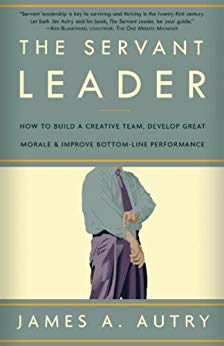
“The Servant Leader” by James A. Autry

This book, “The Servant Leader: How to Build a Creative Team, Develop Great Morale, and Improve Bottom-line Performance,” by James A. Autry, is very much a how-to book, describing the way to implement servant leadership in many aspects of leading an organization. James Autry was president of the magazine group for Meredith Corporation and later a business consultant and speaker.

The author begins with a list of five attributes that describe servant leadership. A servant leader must –

  • Be Authentic – be real or be who you are in every situation. This includes the concept of honesty and integrity, not fudging or giving yourself some wiggle room around the truth.
  • Be Vulnerable – being honest with your feelings in the context of your work, being open with your doubts and concerns about an idea, and being able to own and admit your mistakes.
  • Be Accepting – assigning value to and accepting every person around you regardless of style or personality. This doesn’t require accepting every idea or never disagreeing, but refers to accepting of the person.
  • Be Present – be fully available and attentive in human interactions. Be centered rather than distracted or attempting to multitask.
  • Be Useful – in other words, be a servant. Be a resource for your people, helping them to be productive and successful.

With this foundation defining servant leadership, the rest of the book applies these traits to the daily practice of leadership. An overarching principle of the book is that servant leaders guide their team or organization to also practice servant leadership principles. Therefore, the team members, following the example of the leader, serve each other.

The book is divided into four parts, with the first devoted to describing servant leadership as noted above. The second part describes how servant leadership shows up in the daily activities of the leader such as hiring people that will fit with the culture of servant leadership, building servant leadership practices into the organization, and managing performance through job descriptions, performance standards, and performance appraissals in a way consistent with the principles.

The third part of the book suggests methods consistent with servant leadership principles in dealing with issues that arise in leadership. This includes dealing with organizational issues such as firing people, closing or relocating operations, or re-focusing a business; personal issues such as dealing with illnesses, either of employees or within their families; or legal issues such as lawsuits and harassment.

The fourth part of the book deals with the circumstances in which servant leadership can be put to the greatest test such as during economic or market downturns, in dealing with the balance between work and family, and dealing with conflict. In discussing conflict the author presents a number of tools for identifying, preventing, and encouraging resolution of conflict.

The servant leader is a steward of both the organization and the people within the organization. As such, he/she is frequently in the position of weighing the interests of various parties versus policies and practices of the organization. The author makes the point that dealing positively with people is most often the best choice for the long-term health of the organization. A servant leader leads in such a way as to build community of service within the organization that leads to a healthy and productive team.

This is a good book on the subject of servant leadership with lots of practical advice and examples of application.

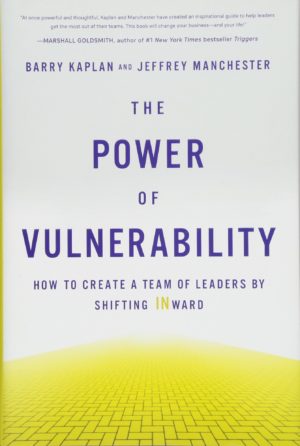
“The Power of Vulnerability” by Kaplan and Manchester

Many organizations do not achieve their true potential because they leave much of their power on the table. Organizations often have a culture that prevents people from bringing their full potential to the organization. While an organization could make changes to its strategy, its processes, its structure, or the members of management, one of the most straight-forward changes that can be made to grow in effectiveness is a change in culture.

This is the big idea in the book The Power of Vulnerability by Barry Kaplan and Jeffrey Manchester. The book describes the culture of many organizations that makes it unsafe to be authentic in corporate interactions. Since there is not safety in the relationships amongst the leadership team, people spend energy posturing and politicking. They do not feel the connection and freedom in which they can present and explore all of their best ideas. Instead, the members of what should be the leadership team are isolated, attempting to manage their own functional silos, hiding their internal struggles from the rest of the organization and squeezing the most they can from their individual responsibilities.

In fact, it is hard to refer to the top management group in such an organization as a team. They more resemble a functional workgroup, cooperating only to a minimal extent and only when forced. A leadership team should be highly related and reliant upon each other. This book is replete with case studies of organizations that came to the authors’ coaching practice with a fractured team and the process used to build them into a cohesive team.

“As opposed to a functional workgroup, a team is engaged and connected at every level – emotionally, physically, spiritually, and professionally.”

The first step in moving from a group of isolated managers into a team of leaders is to establish a relationship of safety and connection between all of the team members. With such a relationship, the team members can then grow in authenticity, able to share and explore with the team all of their ideas, along with personal struggles and emotions. This relationship also allows team members the setting to quickly short-circuit any interpersonal misunderstandings or struggles that should arise.

“The height of a team’s performance compared to its potential is directly related to the depth of connection among its members.”

The book presents some functional tools for building connection in the team, for effective meetings in a culture of safety and connection, and for interpersonal relationships. By no means is this development of a safe and connected culture an easy process. Rather it takes great effort to first turn around the culture and then a great deal of intentionality to maintain and continually grow this culture over time.

As with any cultural change, the leadership team must first buy in and practice the new culture. Over time this culture, with some encouragement, can grow throughout the organization.

“When the team ‘plays it safe,’ it avoids challenges and misses opportunities. Yet, when the team ‘INpowers’ itself to ‘safely play,’ the team’s authentic communications inspire emergence of enormous capacity.”

The concepts presented in this book are fundamentally about developing a highly effective corporate organization based on the idea of being fully present, fully connected, and fully authentic. Of course, these concepts are the key building blocks for any close relationship, including marriage, parenting, or close friendships. Anyone interested in developing deeper relationship will find it helpful.

Because this book outlines many of the same concepts that I emphasize in my coaching and consulting work, I naturally enjoyed it greatly. It is not a particularly easy read because of the style. It also is clearly written with the idea of gaining coaching clients, as it stops short of presenting the tools that the authors use to develop cultural change. Still I recommend this book.

Leading from Behind

In recent years the phrase, leading from behind, has become popular. People often mention Nelson Mandela as a person who popularized this leadership concept. In his 1994 autobiography, “Long Walk to Freedom,” Mandela described his model of leadership in this way: “a leader…..is like a shepherd. He stays behind the flock, letting the most nimble go out ahead, whereupon the others follow, not realizing that all along they are being directed from behind.”

In the more traditional view of leadership, it was the leader who was out front, or in the spotlight. The leader provided direction and instruction for his/her followers. The followers dutifully (or sometimes reluctantly) waited for commands and carried them out. The leader received credit for the accomplishments of the team.

In a 2010 article in the Harvard Business Review, Dr. Linda Hill described the changing business environment and the impetus provided for changing from the traditional view of leadership to a lead from behind model. Dr. Hill cited two major drivers. First, “the psychological contract between companies and employees is changing. Among other things, people are looking for more meaning and purpose in their work lives.” She went on to say that people “increasingly expect to be valued for who they are and to be able to contribute to something larger than themselves.” They expect to receive credit for their contribution. Secondly, the article described the increasing importance of innovation in determining a firm’s competitiveness. The necessary innovation is increasingly the result of successful team effort. This team effort is most effective with a lead from behind model of leadership.

The best leaders are continually working to reproduce themselves. One of their priorities is the growth and development of their followers into effective leaders. Effective leaders are not seeking the spotlight but value each team member and their contribution.

Leading from behind is not sitting on the sidelines, watching the team from afar. It is not passive leadership. Nor is it shirking the responsibilities of leadership. Those that lead from behind are not detached from their team members.

Instead, leading from behind is active leadership but with a different mindset than the traditional view of leadership. The traits, practices, or beliefs for leading from behind include the following:

  • View leadership as a collective or collaborative effort. While one person may appear in the organizational hierarchy as the leader, leadership is shared within the team. The functional leader is intentional about developing the leadership abilities of team members and each one has the freedom to take a leadership role when their capabilities suggest doing so.
  • Actively work on team dynamics. The lead from behind leader seeks to maximize the effectiveness of the team by assuring that all members have their voice and that the team operates with respect and mutuality. The leader seeks to build the relationships within the group and to assure that no one hijacks the group.
  • Incorporate the group’s combined intelligence and talents. The combined capabilities of the team exceed the sum of the parts. The leader assures that the team draws out and adequately weighs the input of each member. The leader models the valuing the contribution of each team member.
  • Practice humility. While functionally responsible for and in charge of the group, to lead from behind requires that the leader values all of the team members and seeks to recognize and reward the team’s effort and the contribution of each member. “Humility is not thinking less of yourself, it is thinking of yourself less.” The leader’s voice is of equal weight with every team member.
  • Ask, don’t tell. To lead from behind sometimes requires that the leader draw out the input from the team members. This often means utilizing the coaching technique of asking powerful open-ended questions, rather than offering suggestions.
  • Speak last. To prevent team members from deferring to the leader’s opinions, especially in the early days of building a lead from behind environment, the leader often must withhold their input until the other team members have all weighed in with their input. It is easy for some team members to simply accept and follow the opinions of the leader.
  • Don’t confuse assertiveness with leadership. There will be times when assertiveness is required to keep the process on track, but leadership is about influence built on a relationship of trust and respect. And in the lead from behind model, team leadership is a shared function. Therefore, assertiveness must frequently be held in check.
  • Assure that the vision and goals are on target. While the moment by moment leadership is shared amongst the team, leading from behind does not mean abdicating the responsibility for keeping the team on track. If the team begins to wander off course, the leader must remind them of their goals and re-focus them.
  • Step forward in key moments. While leading from behind can be the general philosophy or model of leadership, there are certain times when the hierarchical leader must assert him- or herself. These could be instances when the team dynamic becomes unhealthy, when the team gets off course, when the sense of urgency gets lost, etc. And a general rule is that successes are attributed to the team and failures are shouldered by the leader.

To operate as a true team and maximize the synergy of thought and action, functioning as a group of equals is necessary. Leading from behind allows the functional leader to step out of his/her position of authority and operate on common ground with the rest of the team.

Are you able to effectively lead from behind? In what ways do you struggle to do so?

Value People, Evaluate Performance

It is very easy to intermingle our view of people with our view of their actions, especially when we need to give corrective feedback. When we do so, the natural result is conflict as the other person feels personally attacked and most likely will defend themselves. When we fail to value the person, we make it impossible to build the relationship or trust and respect that effective leadership requires.

I learned the difference between criticizing the person and criticizing the action from my father-in-law, who was a great example of what it meant to be a man and a leader. On the two occasions where my actions angered him, we had discussions. In those discussions it was quite clear that he loved me personally but that he was disappointed in my actions. The discussions centered on my actions and the choices that I had made.

As a leader we need to always value the individual. This is common decency and a necessity for co-existing. It is also a command. In Scripture, the second part of the Greatest Commandment is to “love your neighbor as yourself.An effective leader demonstrates humility, valuing others as much as they value themselves.

How do we as leaders demonstrate the value that we place in the people on our team? Here are some suggested practices to incorporate into our daily interactions with the people around us:

  • Demonstrate a genuine interest.
  • Value their uniqueness.
  • Respect their values and beliefs.
  • Listen to their thoughts, opinions, and emotions.
  • Express gratitude for their contributions.

In her book, Radical Candor, author Kim Scott defines a model of leadership built on radical candor, which she defines as caring personally and challenging directly. This “challenging directly” is a matter of providing clear and proper guidance. We could also describe this type of relationship as “speaking the truth in love.”

How do we then provide guidance that values the person and evaluates performance? Here are some guidelines for effective guidance that evaluates performance:

  • Provide guidance from a relationship of personal caring. As mentioned, guidance is best received within a relationship of trust and respect. Therefore, there must be an ongoing dialogue that demonstrates this relationship. Obviously, if the only conversations are those delivering criticism, the guidance will likely not be welcomed or valued.
  • Don’t personalize guidance. It is not “you did….” or “you are….” but rather a focus on the actions or behavior. Avoid the fundamental attribution error, that is using perceived personality attributes, such as smart, stupid, lazy, greedy, etc.
  • Address specific action or behavior. Guidance is not focused on the person, for example, “you are so smart.” Neither is the best guidance given as general statements, such as “The presentation was good.” Rather, the best guidance focuses on the specific actions or behavior, such as “the logic that was shown in the presentation made it easy to follow” or “the presentation could have explored the alternatives more fully.”
  • Frame guidance based on the future. The purpose of guidance is to reinforce the positive performance or to improve the negative. Leaders use past action or behavior to guide people into a better future performance. Therefore, guidance uses the observed performance to either make recommendations for the future or to elicit thoughts about improving performance for the future.

Leadership based on valuing the person and evaluating the performance doesn’t mean that leaders need to accept performance that does not meet requirements or expectations. Part of caring personally is encouraging people to perform to their best. If their best is less than what is required or expected for the position, then perhaps they are in the wrong position. Helping and encouraging them to either grow to meet the position requirements or to find a different, more suitable position is the caring thing to do. This can mean firing a person who is better suited for an opportunity elsewhere. Even firing can be done in a way that expresses the value that we hold for the other person.

Is the feedback that you give helping your team reach their potential and meet expectations?