Leaders: Extroverts or Introverts?

Which personality type makes the best leader, extroverts or introverts? For perhaps the past century there has been a bias toward extroverts, although this is much different than the prior historical view. Wharton professor, Adam Grant, conducted research that found 96% of leaders self-identify as extroverts. Of course, part of the explanation of this high number could be the cultural bias that extroversion is more preferable than introversion. In fact, there are reasons why introverts make great leaders and there are reasons why extroverts might be the better leaders. But rather than a preference for a certain personality type, it seems that the best explanation for leadership capability is character.
People often think of introverts as quiet and extroverts as gregarious or outgoing, but this is an oversimplification. Introverts focus inward, into their own thoughts, and extroverts focus outward, into the world. The difference is sensitivity to stimulation. An introvert is prone to being overstimulated by intense or prolonged social interaction. Extroverts crave stimulating activities like social interaction, social gatherings, and even activities that provide stimulus such as amusement parks or mountain climbing. Another simple way to describe the difference is extroverts gain energy from social interaction while introverts use energy.

At one time it was thought that people were one or the other – extrovert or introvert. It seems more logical that everyone has some of both, with one being more predominant. Also, the predominance of either extroversion or introversion can vary in different settings or circumstances. And people can train themselves to be more of what they deem desirable. Since extroversion is more socially acceptable, at least in the western world, there are many people that would naturally be introverts but have developed the habits of an extrovert, except that they may find it more tiring than a true extrovert would.

The strength that the extrovert personality type brings in leadership is perhaps boldness or persuasiveness. An extrovert is especially effective when leading a group of passive followers, providing energy and direction. The downfall of an extrovert in leadership can be failing to listen and allow team members to express their own thoughts and feelings, resulting in dissatisfaction of those that want to be heard.

The strength that the introvert personality brings to leadership is the ability to think deeply and seek out the input of those around them. An introvert is especially effective when leading a team of highly capable and motivated people where the group’s input and interaction are crucial. The downfall of an introvert could be some degree of isolation or the inability to energize certain followers.

While they differ in how they seek and react to stimuli, both extroverts and introverts are capable of building the character of an effective leader. And it is character more than personality type that determines the effectiveness of a leader. Character traits such as honesty, integrity, authenticity, and humility are not a function of personality type. Both extroverts and introverts can be strong in their respect and appreciation of other people and the thoughts and feelings of others. Extroverts may need to restrain their voice to hear others and introverts may need to become more intentional about seeking out interaction with others. But the personality type of extroversion – introversion does not define a leader.

The lesson for organizations is to not be caught up in what shows on the surface, which is where introversion and extroversion reside. Rather, organizations should make decisions on hiring and promotion based on underlying character traits, the more important definition of leadership ability.

For an interesting discussion of the societal shift toward extroversion, see the TED talk by Susan Cain, author of Quiet: The Power of Introverts in a World That Can’t Stop Talking.

Where are you on the introversion / extroversion scales? What do you see as the advantages or disadvantages of these two personality types?


Leaders Are Servants

The best leaders are, by their nature, servants of those that follow. This servant mentality comes from the character traits that define the best leaders. To be a leader is not a title or position that is assigned to a person. The role of leader is one granted by followers who deem a person worthy of trust to the degree that they are then willing to follow. The characteristics of a servant leader are the traits that draw people to trust and follow.

The servant leader should not be viewed as wimpy or subservient. The traits that define leadership presence are not in conflict with the traits of serving. The best example of a servant leader might be Jesus Christ who, regardless of his position as Son of God, did not regard himself as better than those who followed him. And his servant attitude did not make him subservient to anyone except his heavenly Father.

The servant attitude of a leader is a result of character traits such as the following:

  • The servant leader respects and values people. They think you, not me. The leader would not ask anyone to do what they themselves would be unwilling to do. They value the opinions, thoughts, and emotions of team members.
  • The servant leader acts with humility. They are not haughty or proud. They rely on their inner person rather than using position or title. There is a sense of equality and team.
  • The servant leader encourages those around them. They have a positive attitude and they believe in their team members. Their confidence is contagious.
  • The servant leader seeks the success of those around them. They are committed to help people grow and blossom. They develop leaders in those that they lead.
  • The servant leader is authentic. They are comfortable with who they are and are willing to allow others to see both their strengths and weaknesses.
  • The servant leader develops a culture of trust. They are consistent in keeping their word and caring for others.
  • The servant leader has a long-term view. They are thinking of the benefits to the organization and their people over time. They are willing to invest in others for future results.
  • The servant leader values results for others. They are not self-centered or selfish but seek benefits for those around them.

Leadership is influence and influence is based on relationship. The underlying theme in all of these traits is that servant leaders think of others rather themselves and the end result is that their people respect and trust the leader. This respect and trust leads to performance and results.

Are you developing the character of a servant? What other characteristics do you see as valuable in serving those that you lead?

Competency and Character

Great leadership is based on a combination of both strong competencies and excellent character. The best skills without the positive character traits leaves people cold. Great skills alone can obtain results for the short term but a stressful or highly emotional situation draws out true character and, if that character is weak, will cause followers to not trust and follow. . Great character traits without the skills can make a leader likeable but people don’t see a benefit for the future. Without strong leadership skills, people don’t see enough substance to develop long-term results.

Leadership competency or skills include such things as the ability to communicate, manage change, create a vision, read and understand people, influence others, and negotiate effectively. It includes the ability to digest information and think strategically. Relevant technical and functional skills are important such as scientific knowledge or a strong financial background. Competencies include decision-making and the ability to organize and manage. Competencies in the area of communication include the ability to write or speak clearly and convincingly, the ability to teach, and the ability to organize and manage meetings.

Competencies are learned skills. We develop them through experience, following an example or model, or some education process. This might be from a book or seminar. In a sense, competencies can be viewed as tools in a toolbox.

While competencies are what a person knows or is capable of doing, character is who we are. Character can be defined as the sum of virtues, values and traits. The character of a strong, effective leader includes such traits and virtues as integrity, honesty, confidence, humility, authenticity, passion, selflessness, ethical, and respect for others. Character is built into our lives through our beliefs and the practice of those beliefs over time.

In an effective leader competency and character flow together. It may be difficult at times to differentiate whether actions are based on competency or character. On the other hand, when a person is attempting to lead without a base of both competency and character, it can be both obvious and ineffective. Some further examples of both one-sided and blended actions are shown below.

  • A person with good communication skills can craft a document that presents the facts clearly. A leader with both communication skills and a respect for others presents the facts clearly and in a manner that values the audience and considers the impact and likely emotions of the reader.
  • A person with meeting management skills can organize and conduct an efficient meeting. A leader with both competency and character can conduct a meeting where the attendees feel a part of the process and that their input is valued.
  • A person with the ability to teach others can present information clearly when asked to do so. A leader with both competency and character looks for teaching opportunities in every interaction.

Evaluating and building our competencies can be straight-forward. What skills do we have and where do I need to build more or deeper skills? Evaluating and building our character requires a deeper look and a greater effort as we often actually need to change who we are as we strengthen our character.

Where do you need to grow and what is your plan for doing so?

12 Habits of Genuine People

Often the most highly valued character traits of leaders, in fact of any person, are listed as authenticity, sincerity, vulnerability, transparency, or integrity. These are descriptors of the type of person that draws others into relationship. They can be trusted as a safe person. WYSIWYG – what you see is what you get. People without these sorts of character traits might be better kept at a bit of distance because they cannot be fully trusted.

Another word describing a person with these sorts of character traits is “genuine.” Dr. Travis Bradberry, the author of Emotional Intelligence 2.0, wrote an article titled 12 Habits of Genuine People describing such genuine people. Genuine people are self-aware, self-confident, and comfortable in their own skin. They are also humble, respecting and valuing others. Here are the 12 habits that Dr. Bradberry used to describe genuine people in case you don’t have time to read the full article:

  1. Genuine people don’t try to make people like them. Genuine people are who they are. They know that some people will like them, and some won’t. And they’re okay with that.
  2. They don’t pass judgment. Genuine people are open-minded, which makes them approachable and interesting to others.
  3. They forge their own paths. Genuine people don’t derive their sense of pleasure and satisfaction from the opinions of others.
  4. They are generous They want you to do well more than anything else because they’re team players and they’re confident enough to never worry that your success might make them look bad. In fact, they believe that your success is their success.
  5. They treat EVERYONE with respect. Genuine people treat everyone with respect because they believe they’re no better than anyone else.
  6. They aren’t motivated by material things. Genuine people don’t need shiny, fancy stuff in order to feel good. Their happiness comes from within and from relationships with those around them.
  7. They are trustworthy. You know that if they say something, it’s because they believe it to be true.
  8. They are thick-skinned. Genuine people have a strong enough sense of self that they don’t go around seeing offense that isn’t there.
  9. They put away their phones. Genuine people create connection and find depth even in short, everyday conversations. Their genuine interest in other people makes it easy for them to ask good questions and relate what they’re told to other important facets of the speaker’s life.
  10. They aren’t driven by ego. Genuine people don’t make decisions based on their egos because they don’t need the admiration of others in order to feel good about themselves. Likewise, they don’t seek the limelight or try to take credit for other people’s accomplishments.
  11. They aren’t hypocrites. Genuine people practice what they preach. They don’t tell you to do one thing and then do the opposite themselves. That’s largely due to their self-awareness.
  12. They don’t brag. They’re confident in their accomplishments, but they also realize that when you truly do something that matters, it stands on its own merits, regardless of how many people notice or appreciate it.

See the full article for a further development of these 12 traits of genuine people.

Humility, Confidence, and Arrogance

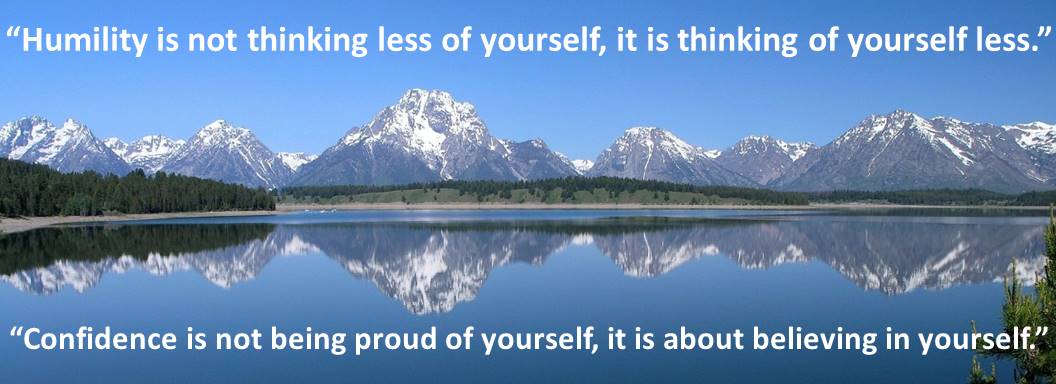
Humility and confidence are two of the most important character traits of an effective leader. Healthy humility and confidence based on reality are both important in building a relationship of influence. The more complete our humility and confidence, the better will be our ability to influence as a leader. What does not fit as a part of leadership is the character trait of arrogance, which is opposite of humility and confidence.

Humility is not meekness or weakness. It is not a low view of oneself, but rather a low view of one’s importance relative to other people. The Merriam-Webster dictionary defines humility as “the quality or state of not thinking you are better than other people.” Healthy humility is a character trait that is built upon the character value of believing in the importance of every person. Leadership is influence and influence is built upon relationships. William James said that “The deepest craving of human nature is the need to be appreciated.” This healthy humility invites the other person into relationship because the value that is placed on the other person is evident. Healthy humility then draws people into relationship where they feel valued and appreciated and therefore open to the influence of leadership.

Humility character development New Horizon Partners

Confidence is not pride or arrogance. The Merriam-Webster dictionary defines confidence as “a feeling or belief that you can do something well or succeed at something.” It is the self-assurance arising from one’s appreciation of one’s own abilities or qualities. Healthy or well-placed confidence is based on a firm grip on reality, the self-awareness of clearly understanding one’s capabilities as well as strengths and weaknesses. Confidence is not based on the magnitude of our abilities but on the accuracy of our self-awareness. This confidence shows up in the leadership relationship as strength or self-assurance upon which people can rely. This strength or confidence also draws people into relationship because they see the strength and feel able to trust it.

Humility and confidence have a positive relationship with each other. These two character traits have no need to be balanced because by nature they balance each other. With a clear understanding of our capabilities and our strengths and weaknesses, we can be comfortable with who we are and what we are able to do. Therefore, with strong confidence we are able to be humble, valuing those around us for what they can contribute. If we truly are humble and place high value in others, we can be secure in our own capabilities, knowing that we have no need to outshine others or puff ourselves up.

Arrogance is also a character trait, although not an attractive one in leadership. Arrogance is largely the result of not having healthy humility or of not having confidence based on reality. The Merriam-Webster dictionary defines arrogance as “an attitude of superiority manifested in an overbearing manner or in presumptuous claims or assumptions.” In other words, arrogance is an attitude of self-importance or pride. Where humility is based on a belief in the importance of others, arrogance is based on a belief in the importance of self, polar opposites in attitude. Arrogance can often be the result of an effort to compensate either for a lack of capability or a lack of confidence. Without confidence, a person could feel the need to puff oneself up and pretend to be superior or arrogant.

Where humility and confidence draw those around us into a relationship where we are able to influence, arrogance has the opposite effect. Arrogance creates a lack of trust and respect, driving people away from relationship, undermining the potential for influencing as a leader. Thus there is no room for arrogance in effective leadership.

How do we build healthy humility and confidence based on reality? Growing humility is a matter of character growth, building our belief in the value of other people and coming to terms with a lower level of self-importance relative to others. Growing in confidence is a matter of further developing our own self-awareness and self-acceptance. Character growth is not a matter of learning a new skill but is a matter of retraining our brain to incorporate new values and traits into the way that we think and behave.

Do you possess healthy humility and confidence rooted in reality? Are you growing in character?

Ready, Fire, Aim

4 Character-Based Stumbling Blocks to Good Decision-Making

As leaders we are often called upon for decisions or to effectively guide a decision process. We face choices every day, some large, some small, some urgent, some mundane. A large part of a leader’s responsibility is focused on decision-making.

strategic decisions New Horizon Partners

A good decision process includes the following steps:

  • Ready – Identify and clearly articulate the pressing issue. This might require asking five whys or seeking other perspectives. Before we can make a good decision we need to understand and have consensus on what needs to be resolved.
  • Aim – Gather information and input. We need to make informed decisions. Once we understand the issue, we may need to identify contributing factors, decision options, and implications of various options. We may need both facts and the opinions of those involved or affected by the decision.
  • Fire – After we know the issue and understand the facts, we are ready to make a decision and take action. The final decision may fall to the leader, may be delegated, or there may be a team consensus process, depending upon the culture and nature of the decision required.

But sometimes people (or organizations) have certain stumbling blocks that interfere with making good decisions in an appropriate manner. Often these stumbling blocks can rise up out of character, interfering with an effective decision process.

Stumbling Block #1 – Ready, Fire, Aim – Some people are eager to make decisions. Maybe this comes from their desire for power or maybe from arrogance, believing they must have the right answer. These people make snap judgments and quick decisions without gathering the facts. Quick-trigger decisions can simply confuse the organization, sapping energy. Frequently someone needs to come back later and clean up the mess and choose a different path. Effective leaders are not enamored with either power or perfection but with performance; they seek to make good decisions.

Stumbling Block #2 – Ready, Ready, Ready for What? – Some people have trouble seeing the need for decisions because they have difficulty in facing reality. They cannot see the issues because they cannot accept that things are not the way that they perceive them. For example, they might refuse to believe that the market environment has changed (We don’t need to worry about those new entrants, they never survive.) or that the organization needs to change (We’ve always done it that way.) Effective leaders have a nice balance of optimism and skepticism; they are ready and able to embrace reality. They scan the horizon to identify issues early and move forward in making timely decisions.

Stumbling Block #3 – Ready, Aim, Aim, Aim…. – Some people have difficulty making a decision. They consistently need more information or they need to think about it for a while. “Let’s come back to this at another meeting.” Often this inability to make timely decisions is a result of a critical voice that tells them they need to be perfect, that they are not OK if they make a mistake. A few decisions are “do or die” but most are not. The decision process needs to gather input but, once we have the facts, we are often wasting time and energy as we wait for more information and a decision. Being timely is often as important as being right. Effective leaders have strength and confidence; with a healthy appetite for realism and facts, they are able to accept risks and the possibility of making a mistake now and then.

Stumbling Block #4 – Ready, Aim, Fi…….. – The decision is not complete until there is an appropriate action plan for implementation in place. Who does this affect? What needs to be communicated, to whom, and how? What actions need to take place? Who will be responsible? How will they be tracked? Some leaders are too busy moving on to the next issue and decision, which leaves the previous one half-baked in a sort of ADD scenario. Effective leaders understand the system and see things through; they are able to delegate and hold people responsible.

Effective leaders deal with reality and recognize issues that require decisions. In this process they are cognizant of the appropriate level for decision-making. They guide their people in gathering the relevant information needed for the decision process with reasonable confidence. They lead or oversee the appropriate decision-making process and assure that the decision is effectively implemented.

What is your decision process and where are your stumbling blocks?

Self-Awareness Is Foundational to Leadership

The traits of leadership are often listed as characteristics such as integrity, confidence, vision, communicator, etc. Seldom do we see on these lists of important characteristics the trait that is foundational to them all – self-awareness. Self-awareness is defined as the conscious knowledge of one’s own capabilities, character, feelings, motives, and desires. It can also be described as the ability to know oneself deeply and to act from that knowledge.

Leadership self awareness New Horizon Partners

The self-awareness that we are speaking of here is personal self-awareness. One of the domains of emotional intelligence is termed emotional self-awareness. EQ self-awareness is a subset of personal self-awareness, which is a broader knowledge of who we are.

Self-awareness can be considered on a spectrum or scale. We probably have met people and later thought that “they haven’t a clue” because they seem so unaware of themselves or aren’t in touch with reality. On the other end of the spectrum are those people that are very comfortable in their own skin, those who are highly self-aware. We cannot be perfectly self-aware because everyone has a few blind spots or things that are buried deep inside them. Even though we can never be completely mindful, highly effective leaders are highly self-aware.

What does it mean to be self-aware? The people who have a clear perception of themselves can agree to a great extent with most of the following statements:

  • I know my strengths in the areas of intelligence, skills, and technical and functional knowledge.
  • I know my weaknesses in the areas of intelligence, skills, and technical and functional knowledge.
  • I am aware of my emotions and able to manage them.
  • I know my emotional triggers.
  • I understand my interpersonal strengths and weaknesses.
  • I can differentiate myself and what I am feeling from those around me.
  • I understand the boundaries where my responsibilities end and the responsibilities of others’ begin.
  • I am aware of my intuition and know the situations where I can trust it.
  • I am able to understand and accept the reality of my personal situation.
  • I am able to understand the cause and effect of circumstances in my life.
  • I am clear on my motives and desires in life, in relationships, in work, etc.
  • In addition to my own perspective, I am able to see myself as others see me.
  • I know roughly where I am on the scale from “haven’t got a clue” to completely self-aware.
  • I recognize most of my blind spots and areas for development.
  • I am continually striving to become more self-aware.

(Download our self-awareness assessment worksheet to evaluate your own self-awareness.)

High self-awareness is a strong predictor of success as a leader. This mindfulness lies beneath a person’s self-confidence, ability to be vulnerable, skill at managing relationships, ability to delegate, self-discipline, and many other elements of effective leadership character and competency. The less clarity we have about ourselves, the more likely that we will stumble along the way.

How does a person grow in self-awareness? To develop a thorough understanding of ourselves requires that we are consistently looking inside ourselves and asking the question, why? We are seeking to know what lies within us and what drives us. To answer these types of questions, assessment tools such as Myers-Briggs, DISC, etc. can be helpful. Seeking the input of those around us with tools such as EQ360 can help to see through the blind spots or provide perspective. Journaling can be helpful in thinking through the “why” question as a person tries to understand themselves more fully. A trusted friend, advisor, therapist, or peer group can help us in digging deeper into who we are and why we operate or behave in certain ways. To be self-aware means to be continually developing our self-awareness, so these tools should be frequently re-visited.

What might be other descriptors of self-awareness? How are you growing in your own self-awareness?

I Am the Problem

When working with married couples who are struggling or just want to grow in their relationship, we often encourage them to adopt the mindset of “In this relationship I am the biggest problem.” This is not an attitude of self-condemnation. And it is not saying that the other person is without any faults. It is rather the realistic acceptance that we are responsible for our own thoughts and behaviors. We are not likely to be successful when our goal is changing the other person.

relationship leadership Ken Vaughan

In leadership situations where we have relational struggles, the same mindset is also appropriate. Leadership is influence and influence is only achieved through positive relationships. So what should be our response when we wish to lead someone with whom we have some conflict or someone who might be obstinate or have some social skill challenges?

If our focus is on trying to change the other person, some outcomes might be as follows:

  • We might be so focused on the other person’s issues that we fail to see our own faults. (Everyone has some weaknesses.)
  • We might appear arrogant, driving the other person away.
  • We might fail to recognize or understand what is bothering the other person.
  • We might not recognize our own contributions to the conflict or lack of communication.
  • There might be some resentment developed in the other person.
  • We might drive a further wedge or build a higher wall in the relationship with our attitude.

On the other hand, if we adopt the mindset that “I am the problem in this relationship” we will search for ways to bridge the gap and heal or grow the relationship. Even if we are convinced that the other person has a relational problem, we should look for the ways that we can grow as an individual or that we can adapt to work with the other person. With this mindset we might see outcomes as follows:

  • If we’re focusing on our part we are probably growing in some way.
  • We might show vulnerability that we are human and have weaknesses, making ourselves approachable.
  • We might see things from the other person’s perspective.
  • We might show humility thus inviting others into relationship.
  • We might discover some solutions that actually work to bridge the gap.
  • We might develop some empathy for the other person and the struggles that they face.
  • We are more likely to build a positive relationship where we are able to influence.

Of course it is ideal when both parties adopt this mindset, but one needs to take the initiative. Be the change. Focus on your own behavior, not immediate results or change in the other person. Know that you are doing the right thing by doing your part. Find people who will hold you accountable and encourage you to persevere. Recognize and affirm changes you see in the other person. You will probably be surprised by the changes you see, either in yourself or in the other person.

Do you have a relationship that is struggling? What behaviors do you need to adopt to bridge the gap?

“Integrity” by Dr. Henry Cloud

When we hear the word integrity in the context of character we think of the definition of being honest and having strong moral principles. In his book, “Integrity”, Dr. Henry Cloud uses another definition of integrity, that of being whole or undivided, as in integral or intact. The idea here is wholeness of the person or the character of the person. Character is the most important ingredient of leadership, more important than talent, brains, education, training, or any other component of success. An integrated character determines a leader’s potential to succeed and to avoid the pitfalls that can befall those of lesser character.

character based leadership Ohio

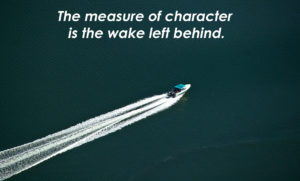
The measure of character is described by Cloud as the “wake” that is left behind us. What do those with whom we interact see us leave behind in terms of tasks and relationships? How positive is our “wake”? Do people feel that they have grown and accomplished much because of us? Or are they glad that they survived with minimal damage?

Character guides our thoughts and behaviors. Dr. Cloud defines character as the ability to meet the demands of reality, a broader definition than sometimes used. Speaking of the various capabilities required to lead, he says that “while you don’t need all the gifts that exist in the world, you do need all the aspects of character while you are putting your gifts to work.” The book is focused on the aspects of wholeness or integrity of character that Dr. Cloud says are critical for effective leadership, as follows:

  1. “The ability to connect authentically (which leads to trust).
  2. The ability to be oriented toward the truth (which leads to finding and operating in reality).
  3. The ability to work in a way that gets results and finishes well (which leads to reaching goals, profits, or the mission).
  4. The ability to embrace, engage, and deal with the negative (which leads to ending problems, resolving them, or transforming them).
  5. The ability to be oriented toward growth (which leads to increase),
  6. The ability to be transcendent (which leads to enlargement of the bigger picture and oneself).”

Dr. Cloud makes the point that the integrity of character means that all of these aspects must work together. “Strengths turn into weaknesses without the other parts of a person to balance them out.” While no one has a perfect balance of these abilities, the gap is their need and opportunity for growth.

Trust is an essential element of a leadership relationship. Without trust leaders cannot influence. Trust is built through connecting, through extending favor, and through vulnerability. Connection is based on empathy. Entering into another person’s reality, validating it, and treating it with respect builds connection. Invalidation destroys connection. Another element of building trust is through extending favor. This is described as being for the other person’s best interest without being dependent upon anything. Trust is also dependent upon a certain degree of vulnerability that represents strength that one can depend on but vulnerable enough that one can identify with. Effective leaders need to have a balance of transparency that people can see their vulnerabilities and how they are feeling about things.

An orientation toward reality is a requirement for integrity of character. Leaders “must be in touch with what is, not what they wish things were or think things should be or are led by others to believe they are.” People who are oriented toward reality have a hunger for the truth, whether it be about themselves, their organization, their markets, other people, their relationships, or whatever. They prefer to seek the truth and to then deal with it effectively. They seek feedback from others. They understand themselves and can then work effectively with others to utilize their strengths and work effectively to shore up their weaknesses. They are able to assimilate and accommodate.

People of integrated character have an orientation toward getting results. They understand the concept of ready, aim, fire in decision making and the importance of each step. They are ready to move forward. When things don’t go well, that is another reality that they will deal with and overcome. Even more than that, they are able to let go of things that are good so that they can move on to the best.

The ability to embrace the negative is part of the integrated character. “The ones who succeed in life are the ones who realize that life is largely about solving problems.” Therefore they seek the negatives and seek to resolve them. They do not see the negatives as something painful but as opportunities to make things better and move forward. “Integrated characters are able to recover motivation, hope, judgment, clear thinking, drive, proactivity, and the other faculties needed to move something forward after something bad happens.” They are able to differentiate between themselves and things external. They are also able to confront well when others are causing the negative and to rally the others to work together against the problem.

People with integrated character are oriented toward increase. Previous aspects spoke about results but this aspect is focused on personal growth, both of themselves and those that surround them. One principle of growth is that what is put to use, grows. Leaders need to be open and to hunger for growth. They look for both opportunities and for mentors or coaches that can contribute to their growth. If they think they know it all or do not expose themselves to new experiences and sources for growth, then they will experience disintegration, not growth. Another characteristic of people oriented toward growth is that they want others to grow as well. Those of character balance hunger and gratitude. They value the present without settling for the status quo.

People of integrated character are oriented toward transcendence. “To live and flourish, we must bow to the things larger than us.” “A person with integrated character is a person who possesses the awareness that it is not all about him or her, and the ability and willingness to make the necessary adjustments to the things that transcend him or her at any given juncture.” The mature character stands by his or her values and meets the demands of life.

The integrated character that Dr. Cloud describes is somewhat ideal. Every human being is to some degree unintegrated. None of us have the complete array of the character aspects but, if we wish to maximize our effectiveness, we should be working to grow in all aspects. The book ends by urging us to identify our gaps and growth plans and to move forward.

This is a great book and a must-read in the area of character-based leadership.

What is the nature of your “wake”? How complete is your integrated character and what are your growth plans?

Your Growth Plans for 2017

growth-plans-leadership

At the beginning of a new year it seems appropriate to think about how we can grow in this coming year to increase our effectiveness. I like to think of growth in the three dimensions in which our life should be showing fruit – person, people, and performance.

Person – How effective am I as a person? What are the patterns of my thoughts and behaviors? What are the strengths and weaknesses in my character? In what ways do I plan to grow as a person over this year? Who will serve as my mentor? Who will hold me accountable?

People – How effective am I in my relationships? What relational skills do I need to build up? How would I describe my emotional intelligence strengths and weaknesses? Who are the people in my life where I need to strengthen or repair a relationship? What are my priorities and does my calendar reflect them? Where will I find encouragement and accountability along my growth path?

Performance – How effective am I in my performance, including career, ministry, or even my hobbies? What new areas of knowledge or skill will make me more well-rounded or add to my capabilities? What skills do I need to enhance? What do I need to add to my background for achieving my life plan?

The Townsend Leadership Program is a cohort leadership program based on the premise that leadership is built on character and competency. The program is structured to help participants increase their effectiveness and grow in these three areas of the fruit of our lives – person, people, and performance.

Contact us for a free 30-minute coaching session to develop a growth plan for 2017.