The Impact of Caring Carries this Team to the Super Bowl

“Show your team you care, and they’ll give you everything they have.” This is the philosophy of Sean McVay, the coach of the Los Angeles Rams football team, who is taking his team to Sunday’s Super Bowl game largely because of this philosophy of leadership. Spend the time to know your people, both professionally and personally, and then use your knowledge of them to interact with them. When they see you commit time to building a relationship, they will understand how much you do care. This draws them into a relationship of trust and respect from which they are committed to following. Read the recent article in Inc. to learn more about Sean McVay’s leadership philosophy and the impact that it has had on the team that he leads.

Separation Should Not Be Surprising

Firing with respect and compassion

Call it what you may – dismissal, discharge, layoffs, workforce reduction – firing a team member is not an easy task. This is the reason that it is often not done well. People want to sidestep the issue until it is unavoidable and then want to get it done quickly and move on. But separation should not be surprising. The entire process should be done with compassion and respect, no matter the circumstances.

There are three broad reasons for separating an employee:

  • Firing for cause
  • Reduction in force
  • Dismissal due to performance

Let’s look at these three categories and examine how we might do them with respect and compassion.

Firing for cause is generally the result of behavior on the job that is illegal, unethical, immoral, or in violation of company policy. In these instances, it is clear that disciplinary action is required, therefore there is no surprise to the team member. To not step up to our responsibility as a leader can be detrimental to the organization. When we suspect that some activity has met this criterion, we need to gather facts and then have a conversation with the person or persons involved. If, in fact, the person has stepped out of bounds, immediate dismissal is often the most appropriate outcome. In doing so, the discussion needs to be about the behavior and the implications or results of the behavior, both to the organization and to the individual. Rather than a response in anger, some compassionate guidance regarding the choice’s made might be helpful to the person’s future.

A reduction in force is often due to a downturn in business and the need to cut costs. These circumstances seldom crop up overnight, so our responsibility as a leader is to present the facts to the organization and communicate the need to cut expenses. With strong communications and culture, some organizations have voluntarily taken an across the board pay cut and rallied around other cost-cutting rather than seeing a workforce reduction. Some people might argue against presenting the facts of a downturn to the workforce as causing fear, but remember that clarity, not secrecy, drives out fear. If the team understands the situation, when staff reductions are necessary, they are not caught by surprise.

Dismissal due to performance is the most common and the most difficult firing situation for most people. It is important to remember that this situation is frequently as much the leader’s responsibility as it is the individual team member’s. It can result from putting the wrong person in a position or not clearly defining the expectations. And this is the situation where employees are most often caught by surprise due to a lack of clear communication.

Effective leaders provide feedback, both positive and corrective, to their team members on a consistent basis. If a person is not meeting the performance standard, here are three steps to deal with the situation in a positive and compassionate fashion:

  • The first step should be feedback to point out the deficiency, the effect of the deficiency, and to develop a plan of action for improvement. This feedback session should be a dialogue in which the action plan is jointly agreed upon targeted at bringing performance up to standard. (For more thoughts on effective feedback, see this series of articles.)
  • Performance and progress on the plan of action should be reviewed periodically. It is possible that the action plan may need to be adjusted or reinforced.
  • When it seems impossible or improbable for this team member to meet the performance standard, an alternative course should be discussed. If they had been promoted from a previous position in which they were successful, would they prefer to move back to that position? Are there other positions in the organization where they are more likely to be successful? (This should not be a case of pawning off the problem to a different manager.)
  • If the person is unable to meet the performance standard and if another more appropriate position is not available, then it is time for dismissal. To do so with compassion may require offering some transition assistance. This might include extending employment for a short time while allowing time for a job search, providing outplacement assistance, or helping with connections and referrals.

Firing with compassion and respect is the right thing to do because it demonstrates respect for the person. It may one of the best ways to demonstrate the character of the leader and the culture of the organization.

Are you able to lean in and act with compassion when someone needs to be fired?

Profit Is a Reward, Not a Goal

Profit is the reward that a business earns for providing value to its customers and producing that value economically. While the customer does not intentionally award profit, they recognize the value offered and pay what they consider a fair price that is in line with the value. If the supplier is able to provide this value economically, then there is a profit after the cost of producing and supplying the product or services.

The mission of any business is, in general, to meet some societal need for certain products or services. This package of goods and services is termed the value offering. In making a choice of a supplier, customers evaluate various value offerings and select a particular supplier’s value offering based on the match with the needs of the customer. Evaluating a value offering is a complex process that incorporates a broad range of conscious and subconscious factors.

The ability to generate a reasonable profit that represents an attractive return on investment determines the viability of a business. If the market is unwilling to pay a price that generates a reasonable profit or if the organization is unable to provide the value offering of products and services at an economical cost that allows a reasonable profit, then the business is not viable on a long-term basis. It is not likely that rational investors will be willing to provide the capital necessary to support the business if it is unable to generate adequate profits. Therefore, it is logical for the business to identify target levels of profitability. However, it can be dangerous to establish profit goals or objectives, becoming overly focused on profit alone.

Some organizations do make the mistake of establishing profitability goals or objectives. The danger in doing so is that goals and objectives should drive strategies and action plans. When a business sets profitability objectives, these objectives then drive the actions of the business. At best profitability objectives set up a conflict between meeting customer needs and driving for profitability. In the worst case, the result is a loss of focus on the customer, the customer’s needs, and the appropriate value offering to best meet these needs. Instead, profitability objectives drive an internal focus on costs and pricing that ignores the customer and the value offering. In the long term, a business that is focused on costs or profits often sacrifices value that meets customer needs, hence, damaging the firm’s long-term competitive viability.

We often see examples of this short-sighted or backwards view. The pressure of Wall Street analysts drive publicly-held companies to overly focus on profits. Many private equity firms play the short-term game of pumping profits and cash flow to flip the investment quickly. In both of these cases, the businesses that get sucked into overly focusing on profitability are liable to enter a death spiral in which cost reductions to generate profits result in lower value to customers, resulting in loss of market share, resulting in the need to further reduce costs, and so forth.

None of this is to negate the importance of generating profits. Rather, businesses that are successful in the long-term focus first on meeting the needs of their customers, then on managing the costs associated with providing that value to the customer in such a way as to generate adequate or even excellent profitability.

Is your organization focused on providing value to your customers or profit to your owners?

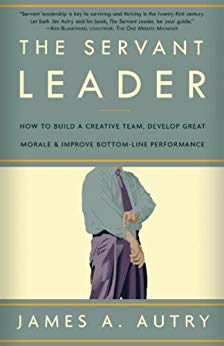
“The Servant Leader” by James A. Autry

This book, “The Servant Leader: How to Build a Creative Team, Develop Great Morale, and Improve Bottom-line Performance,” by James A. Autry, is very much a how-to book, describing the way to implement servant leadership in many aspects of leading an organization. James Autry was president of the magazine group for Meredith Corporation and later a business consultant and speaker.

The author begins with a list of five attributes that describe servant leadership. A servant leader must –

  • Be Authentic – be real or be who you are in every situation. This includes the concept of honesty and integrity, not fudging or giving yourself some wiggle room around the truth.
  • Be Vulnerable – being honest with your feelings in the context of your work, being open with your doubts and concerns about an idea, and being able to own and admit your mistakes.
  • Be Accepting – assigning value to and accepting every person around you regardless of style or personality. This doesn’t require accepting every idea or never disagreeing, but refers to accepting of the person.
  • Be Present – be fully available and attentive in human interactions. Be centered rather than distracted or attempting to multitask.
  • Be Useful – in other words, be a servant. Be a resource for your people, helping them to be productive and successful.

With this foundation defining servant leadership, the rest of the book applies these traits to the daily practice of leadership. An overarching principle of the book is that servant leaders guide their team or organization to also practice servant leadership principles. Therefore, the team members, following the example of the leader, serve each other.

The book is divided into four parts, with the first devoted to describing servant leadership as noted above. The second part describes how servant leadership shows up in the daily activities of the leader such as hiring people that will fit with the culture of servant leadership, building servant leadership practices into the organization, and managing performance through job descriptions, performance standards, and performance appraissals in a way consistent with the principles.

The third part of the book suggests methods consistent with servant leadership principles in dealing with issues that arise in leadership. This includes dealing with organizational issues such as firing people, closing or relocating operations, or re-focusing a business; personal issues such as dealing with illnesses, either of employees or within their families; or legal issues such as lawsuits and harassment.

The fourth part of the book deals with the circumstances in which servant leadership can be put to the greatest test such as during economic or market downturns, in dealing with the balance between work and family, and dealing with conflict. In discussing conflict the author presents a number of tools for identifying, preventing, and encouraging resolution of conflict.

The servant leader is a steward of both the organization and the people within the organization. As such, he/she is frequently in the position of weighing the interests of various parties versus policies and practices of the organization. The author makes the point that dealing positively with people is most often the best choice for the long-term health of the organization. A servant leader leads in such a way as to build community of service within the organization that leads to a healthy and productive team.

This is a good book on the subject of servant leadership with lots of practical advice and examples of application.

Disagreement vs. Conflict

Call it what you will – discussion, debate, disagreement, argument, conflict, confrontation – as a leader you face the task of keeping these encounters productive for the organization and preventing them from becoming debilitating. To gain the maximum benefit, the organization wants to promote the free flow of ideas and information. To prevent damage to the organization and its people, we want to refrain from personal battles. Only with a strong culture and a lot of practice are we able to accomplish both. The leader needs to guide the organization and keep debates and disagreements from becoming conflict and confrontation.

The cardinal rule: separate the idea from the identity. It is always good to consider and build ideas; it is not acceptable to damage identities.

Culture should establish the rules of engagement. What do we as an organization believe about people and what do we believe about ideas? What is acceptable or encouraged? What is out of bounds in the way that we deal with people?

Exploring ideas, gathering the best thoughts from the organization, is generally the best route because it adds value. Gathering thoughts from a range of people provides different perspectives, perhaps even different views of truth. Building thought upon thought makes the process robust and adds value. Challenging thoughts and facts drives us to the most likely truth. Exploring together helps each participant to think deeper. And the conclusion after an energetic and full discussion is more likely to produce buy-in from the group. There may still be opposing views in the group, but everyone should be able to unite behind the group’s decision, having had their opportunity to voice their ideas and to be heard and considered by the team. Thus, a culture that values the full presentation and exploration of information without bias and hierarchy adds the greatest value to the organization.

The danger in an energetic discussion of ideas is that it can sometimes turn into a personal battle. We can lose sight of the idea under discussion and slip into the “my idea versus your idea” mode and then into a “me versus you” conflict. If we are able to separate the idea from the identity and maintain the focus on the inanimate idea, the organization wins and there are no winners and losers among the team members. If the discussion or disagreement regarding ideas moves to conflict, then someone (or both parties) falls into the winner-loser battle.

Of course, conflict is not just rooted in a discussion of ideas, it can grow out of any sort of damaged interpersonal relationship. Whatever the source, conflict needs to be resolved before it festers between the two parties and grows into conflict between their allies, departments, etc. Conflicts can sap the energy out of an organization and cause all sorts of problems throughout the organization if they are allowed to continue.

Some organizations actually have a culture which will not tolerate interpersonal conflict and pressures the participants to quickly recognize and resolve their conflict. Unfortunately, this is the great minority of organizations. There are other organizations that won’t tolerate open conflict but won’t push for identifying and resolving it. And, of course, there are organizations that relish conflict, in a “survival of the fittest” mindset.

Most organizations recognize that conflict is harmful to the organization and gets in the way of progress and productivity. Often, the responsibility for facilitating conflict resolution falls to leadership. For many people, it is scary to step into a conflict and force resolution. But avoiding conflict, a more natural human tendency, has a high cost to the organization.

An effective leader has a keen radar that identifies interpersonal conflict and steps in to encourage or force resolution. Of course, the leader, as a third party, cannot resolve the conflict. His/her role is to confront the conflict, point out that it is unacceptable, and facilitate a discussion between the parties aimed at their resolution of the issue. Stepping into conflict is not an easy task and requires courage and skill on the part of the leader to bring the parties together and to facilitate a productive discussion. Resolving conflict does not mean that the parties involved are going to be friends or like each other. But the organization suffers if the people are unable or unwilling to respect each other and to work together productively. Therefore, as a steward of the organization, the leader needs to surface conflict and see that it is resolved.

Does your organization’s culture encourage exploring and challenging ideas while protecting its people?

Resolution or Resolve?

It is the time of year when some people make New Year’s resolutions. Resolutions are often something like “I want to lose weight” or “I want to spend more time with my kids” or “I want to improve my performance on the job to get that promotion.” The words resolution and resolve both come from the root word. However, the use of resolution has often become more like the idea of a wish. People often make a resolution without a plan or a commitment to actually accomplish it. Resolve still holds the definition shown in the Oxford Dictionary of “decide firmly on a course of action,” a sense of intentionality and purpose.

Rather than simply making a resolution that is a wish, if a person really desires to change some behavior, they need to resolve to accomplish the change. This requires following one of the models of intentional change. Here is one example of an effective intentional change model:

Step 1: Identify the current state. What is the current behavior? How can it best be accurately described? For example, how can current job performance be described? Or, what is my current weight?

Step 2: Identify the desired state. How can the desired behavior be described? What are the measures for the desired state? For example, how would the desired level of job performance be described, perhaps in some level of productivity? Or, what is my desired weight?

Step 3: Identify the gap between the current or actual state and the desired state. In what ways does the desired state differ from the current state? What needs to change from the current state to achieve the desired state? For example, how would the desired level of job performance be different than the current level of job performance? Or, what is the difference between my current weight and my desired weight?

Step 4: Set goals for change. What is a goal or a series of goals that move me from the current state towards the desired state? Using the concept of SMART goals (Specific, Measurable, Achievable, Realistic, and Time-based goals), establish some specific goals that, when achieved, move me closer to the desired state. It is generally easier to achieve a series of bite-sized goals than one large goal, so it often makes sense to set a series of sequential goals. For example, in the case of job performance, what level of productivity should I achieve in the next month? Or, how many pounds can I realistically take off in the next week or month?

Step 5: Identify the actions that will achieve the goals. What are the specific things that I need to do to reach my goals and move me toward the desired state? These actions need to be very specifically defined, including describing the actions, when they will be taken, how often, etc. For example, each morning I will close my door and work without interruption for three hours on this project. Or, I will exercise by walking two miles three days a week before breakfast.

Step 6: Develop an accountability relationship. We are more likely to remain committed and stay on track when we have someone that will encourage us and hold us accountable for actually carrying out the actions and achieving the goals. Without someone to hold us accountable, we often find excuses to postpone or cut short our action plans. A life coach is a good choice as an accountability partner; in fact, a coach can help a person with each step in this process.

Step 7: Track progress. A visual record of action taken and goals achieved helps keep the fire going.

Step 8: Celebrate success. As you achieve goals, take the time to do something concrete to mark progress. This imprints the success in our minds.

Step 9: Make the change a permanent part of your life. If this growth goal is something that you want to be a permanent part of your life, be sure that you follow the action plan long enough to build it into a habit. And then set reminders to check back and be sure that the behavior remains a habit.

Rather than simply wishing for personal growth or a change in behavior, be intentional about identifying what you want to change, achieving the change, and making that change permanent.

Are your resolutions a wish or an actual, intentional plan for change or growth?

Congruity in Leadership

Congruity is a quality of agreement and appropriateness. Where there’s congruity, things fit together in a way that makes sense. In terms of our leadership, congruity is being the same person or leader in every situation.

Leaders who lack congruity believe that they need to lead differently in various contexts of their life. For example, a person might believe that in the work context he/she must be the hard-charging, driven, command-control boss that gives out orders and expects them to be followed quickly and without question. When they are at home, they might be a caring and compassionate leader showing high empathy. And when they are in a leadership role in their church or community, they might be something different yet, perhaps the deep thinker seeking to weigh everyone’s input and building consensus. Sometimes we see a lack of congruity between when someone is leading up in the organization’s hierarchy as opposed to when they are leading down in the hierachy.

A character trait closely related to congruity is integrity. Especially thinking here of the broader definition of integrity, which is the quality or state of being complete or undivided. Integrity carries the concept of consistency of actions, values, principles, expectations, and outcomes. In other words, integrity means we act or behave in a way that is consistent with our values and principles.

When a leader lacks congruity, behaving in a different way in different contexts, there are problems. First, there is a lack of integrity. Our values are deeply embedded, and we can only have one set of values in which we truly believe. Therefore, the different ways that we show up cannot be consistent with one set of values. To operate without integrity, causes an inner conflict as our values subconsciously question our actions. Additionally, in an effort to maintain different leadership personas, they will naturally blend into each other. The people who we are trying to lead, when they get glimpses of the alternate leadership personas or a gap between our values and actions, will be unsure of who we really are and what we actually believe. Therefore, the relationship of influence is weakened.

To build and maintain congruity requires that we, as leaders, first clearly know our values. Secondly, we need to be confident in our ability to lead from our values. Then we need to transition from any inauthentic leadership styles to our true leadership. This process may cause us to re-examine our values or it may cause us to re-assess the various contexts in which we lead. If we believe that they require a different style of leadership than our true leadership, perhaps we don’t belong in those situations.

Practicing congruity in our leadership brings energy and peace to our lives. And we are most effective in our true leadership. Congruity and integrity are key building blocks of effective leadership.

Do you have congruity across your various leadership roles?

Ask, Don’t Tell

One of the best ways for a leader to empower team members or the team is to adopt the practice of “ask, don’t tell.” This concept, sometimes called coaching for performance, moves decisions or solutions from solely the leader to a shared process between leader and team member. “Ask/ don’t tell” is a fundamental skill for coaching but also for leadership. Leaders should often wear their coaching hat when interacting with their team members to develop and to draw out their team members.

It is a human tendency, and especially true for leaders, that we tend to give solutions. We even give solutions when they aren’t requested or desired. Reference any recent discussions with your spouse or children. In the workplace, leaders are quick to give direction and solutions for a number of reasons:

  • It is a developed habit.
  • The hierarchy dictates that the answers come from above.
  • A need or desire to hold the power.
  • It seems the most expedient route to cut to the chase and provide the solution.
  • The leader believes in his/her experience and expertise to provide the “right” answer. (Call it self-awareness or call it arrogance. There is a fine line.)

Breaking the habit and switching to a practice of “ask, don’t tell” probably takes some effort and time.

To implement the “ask, don’t tell” practice means responding to requests for direction or a decision with a question like, “What are some of the options that you are considering?” or “What would you recommend in this situation?” This should lead into some follow-up questions regarding the thoughts behind the choices or the pros and cons of various options, questions like “What are the costs and benefits of these alternatives?” or “What information do you need to gather for making a decision?”

Using the “ask, don’t tell” practice doesn’t mean that the leader abdicates the responsibility for the decision. It simply means that the leader is willing to share the power. If the recommendation that results from discussion and the flow of questions is of equal value to what the leader would have decided, both parties can be satisfied. If the leader is not comfortable with the team member’s recommendation, further questions can be used to dig deeper and resolve the difference in thought. In any case, the leader maintains the responsibility for decisions from his/her team and may need to overrule.

A similar thought relates to meetings. How often do we see the attendees at a meeting posturing their comments as they attempt to determine where the leader will come down? Historically it was often only the opinion of the leader that mattered in a meeting. An effective leader turns this dynamic on its head by only asking questions, drawing out the thoughts of all attendees. Only when the entire team has weighed in and all available information is on the table, will the leader speak. Decision-making becomes a group process. Not necessarily a democracy but a process in which all participate.

The practice of “ask, don’t tell” provides several benefits to the organization and to the team:

  • It empowers team members. Sharing the power that may have been historically held by the leader lets the team members feel a greater contribution and greater control over their work and their lives. They are valued when their input and opinions are drawn out.
  • It builds a relationship of trust and respect. When team members are entrusted with the ability to think deeper and make greater decisions, they feel respected. Leadership is built upon a relationship of trust and respect, but this sort of relationship only works as a two-way street. Therefore, having greater trust and respect for team members comes back around to greater trust and respect for the leader.
  • It develops team members. One of the responsibilities is the development of their people and preparing the next generation of leadership. Drawing out their thoughts through powerful questions develops their thinking process and decision-making skills. As their input is valued, they grow in confidence.
  • It creates better decisions. The “ask, don’t tell” process generates a more robust discussion of an issue, developing different perspectives. In this process, more information is brought to the discussion and decision.
  • It provides an opportunity to evaluate talent and capability. On the other side of the relationship, the “ask, don’t tell” practice provides an opportunity for a leader to see the team members in action as they gather and present logic for decisions. Are these people ready to grow, take risks, and exercise good logic?

The “ask, don’t tell” practice is a powerful way to build the capability of a team and its members. In fact, this practice is effective in building stronger relationships in every part of our lives. It is a better alternative to the practice of constantly providing solutions.

How highly do you value your thoughts relative to those of the people around you? Are you more prone to tell or to ask?

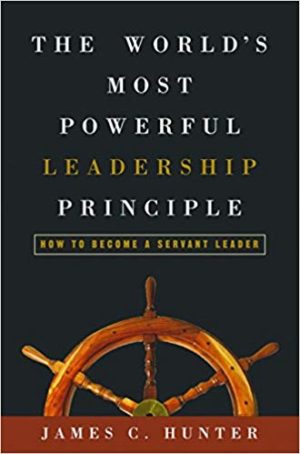
“The World’s Most Powerful Leadership Principle” by James C. Hunter

Jim Hunter’s previous book, “The Servant,” was an allegory that told the story of a business leader whose life was spiraling out of control in every arena. He attends a leadership retreat where the instructor, a former businessman now monk, leads him to realize that true leadership is not built upon power, but on influence or authority, which results from relationships, love, service, and sacrifice.

This second book from Hunter, “The World’s Most Powerful Leadership Principle: How to Become a Servant Leader,” is just that, a how-to book describing Hunter’s thoughts for growing into a servant leader.The goals that Hunter establishes for this book are to: 1) define servant leadership and 2) provide a map for implementation of servant leadership.

The author defines leadership as “the skill of influencing people to enthusiastically work toward goals identified as being for the common good.” The first few chapters discuss the concept of leadership and build out the definition of servant leadership. Leadership is not management and it is not based on power or position. True leadership is influence (the author calls it authority) that is built upon skills and character.

Love is the critical difference that underlies the relationships, service, and sacrifice of servant leadership. This love is not the warm, fuzzy feeling that today’s culture has redefined love to be; rather, it is the other-focused verb that has been the definition of love for eons. The author defines love in leadership as “the act of extending yourself for others by identifying and meeting their legitimate needs and seeking their greatest good.”

The author uses 1 Corinthians 13 to describe the characteristics of love in a servant leadership context. Leadership requires patience, kindness, humility, respect, selflessness, forgiveness, honesty, and commitment. None of these characteristics are soft or wimpy, but are strong and positive.

For most people, the practice of servant leadership requires significant character growth that makes these practices a normal part of daily habits. The author presents a simple model of change or character growth, with three steps. Step 1 is called Friction, where pain or discomfort is felt from the difference between the practices that result from current character and what might result after some character growth. Step 2 is Insight, which involves the development of an understanding of the impact that character growth can produce. Step 3 is the Will = Intention + Actions phase, in which a committed practice of new behavior is used to change character over time.

The author points out that, despite the awesome responsibility of leadership of an organization’s most important asset, many do not see the importance of investing in the development of leadership. Nor do they realize the benefit that results from good servant leadership as it better meets the needs of workers in the organization.

This is a good book that presents servant leadership well. It is always difficult to adequately describe the effort required to make the character change that is often necessary to be effective as a servant leader.

Leadership and the Peter Principle

Most people are familiar with the Peter Principle. This principle was first published in a 1969 book, The Peter Principle, by Laurence Peter and Raymond Hull. The Peter Principle observes that people in a hierarchy tend to rise to their own level of incompetence. That is, people are often promoted based on success in a previous position, until they reach a level at which they are no longer competent. Most often this is because the skills that they used to prove their competency at one level do not translate or stretch to the requirements at the next higher level.

Often the reason for reaching the Peter Principle position of incompetency is that the organization has promoted a person, who was very capable in a technical or functional role, into a management or leadership position. For example, a company might promote their best salesperson to a sales management position, such as regional manager or director of sales. Or, an organization moves their best engineer into an engineering management role. Or, the firm moves a successful accountant into a controller or other supervisory position.

The problem in these types of career moves is that the skills necessary to be successful in a functional or technical role are only a small part of the skillset needed at a higher, managerial level. Organizations often rely on the fact that the person has been successful in a functional role as one of the most important criteria for promotion. The promotion might be viewed as the reward for excellent performance at the previous level. In doing so, organizations often neglect to assess whether the candidate has the necessary capabilities to perform at a supervisory level or they fail to provide the training and development resources to prepare the candidate to be successful.

The cost of making such mistakes can be large. Take the example of promoting the best salesperson into a sales management role. Relationship skills are needed in both positions, but the relational skills needed to deal with customers can be quite different from the relational skills needed to lead a sales team. If the person fails at the higher level, the organization will frequently have lost both the best salesperson and the potential sales leader, meaning that the organization now needs to fill two important roles.

Part of this problem can be that firms have defined career paths in which the only way to move up to higher responsibilities and higher compensation is to move away from functional roles into managerial roles. Not everyone desires or is suited for such a move. Sometimes organizations have developed parallel career tracks, offering the option of moving higher in a functional role or moving into more managerial responsibilities. For example, a firm might have an engineering career track in which the highly-qualified and experienced engineers could have the option of moving into a role such as an engineering sage, in which the person becomes an internal technical consultant or resource for the engineering function.

For those star functional performers that desire moving into a managerial role, the Peter Principle highlights the need for assessment and training. The organization has a responsibility, and is a good steward of their people, when they make every reasonable effort to assure success at the next level. This means clearly understanding the capabilities of promotion candidates and comparing with the criteria for success at the next level. An important part of a leader’s responsibilities is preparing people for future success. The Peter Principle can be averted when organizations are aware and proactive in developing their people.

Does your organizational adequately invest in the future success of its people?